Introduction
A successful educational institution is measured not only by academic achievement but also by the quality of the student experience. Students who feel connected to their campus community are more likely to participate in learning, utilise support services, remain enrolled, and achieve better academic outcomes.
As education becomes increasingly digital, institutions are rethinking how they engage students beyond the classroom. Modern technologies—including mobile applications, AI-powered assistants, digital signage, learning analytics, self-service platforms, and wellbeing programmes—are enabling schools and Universities to build more personalised, inclusive, and supportive learning environments.
Student engagement is no longer limited to extracurricular activities or classroom participation. It encompasses every interaction a student has with an institution, from applying for admission to graduation and alumni engagement. A well-designed digital ecosystem strengthens communication and simplifies access
to services, promotes wellbeing, and creates a stronger sense of belonging.
For Saudi Arabia, enhancing student engagement aligns with Vision 2030, which prioritises educational
excellence, digital transformation, innovation, and human capital development (Kingdom of Saudi Arabia,
2023).
1.Understanding Student Engagement and
Wellbeing
Student engagement refers to the degree to which learners actively participate in academic, social, and
institutional activities. Wellbeing encompasses students’ physical, emotional, social, and psychological
health, all of which influence learning outcomes and long-term success.
Research indicates that students who feel connected to their institution demonstrate higher levels of
motivation, stronger academic performance, and improved retention (OECD, 2023). While educators remain
central to this process, technology can enhance engagement by making support services more accessible
and communication more timely.
Key dimensions of student engagement include:
- Academic engagement
- Social participation
- Digital interaction
- Access to support services
- Campus communication
- Student voice and feedback
- Career development
- Health and wellbeing
A Smart Campus integrates these dimensions into a connected experience rather than treating them as
isolated initiatives.
2. Why Student Engagement Matters
Higher education institutions face growing expectations from students, parents, and accreditation bodies. Today’s students expect:
- Responsive student services
- Personalized communication
- Digital-first campus experiences
- Seamless self-service options
- Fast access to academic and administrative information
- Technology comparable to the banking, retail, and healthcare sectors
Technologies Driving Student Engagement
1. Mobile Campus Applications
A single mobile application can become the student’s digital gateway to campus services.
Typical features include:
- Timetables
- Examination schedules
- Campus maps
- Library services
- Digital student ID
- Event registration
- Push notifications
- Fee payments
- Appointment booking
- Academic calendars
Providing these services through one platform reduces administrative complexity and improves
accessibility.
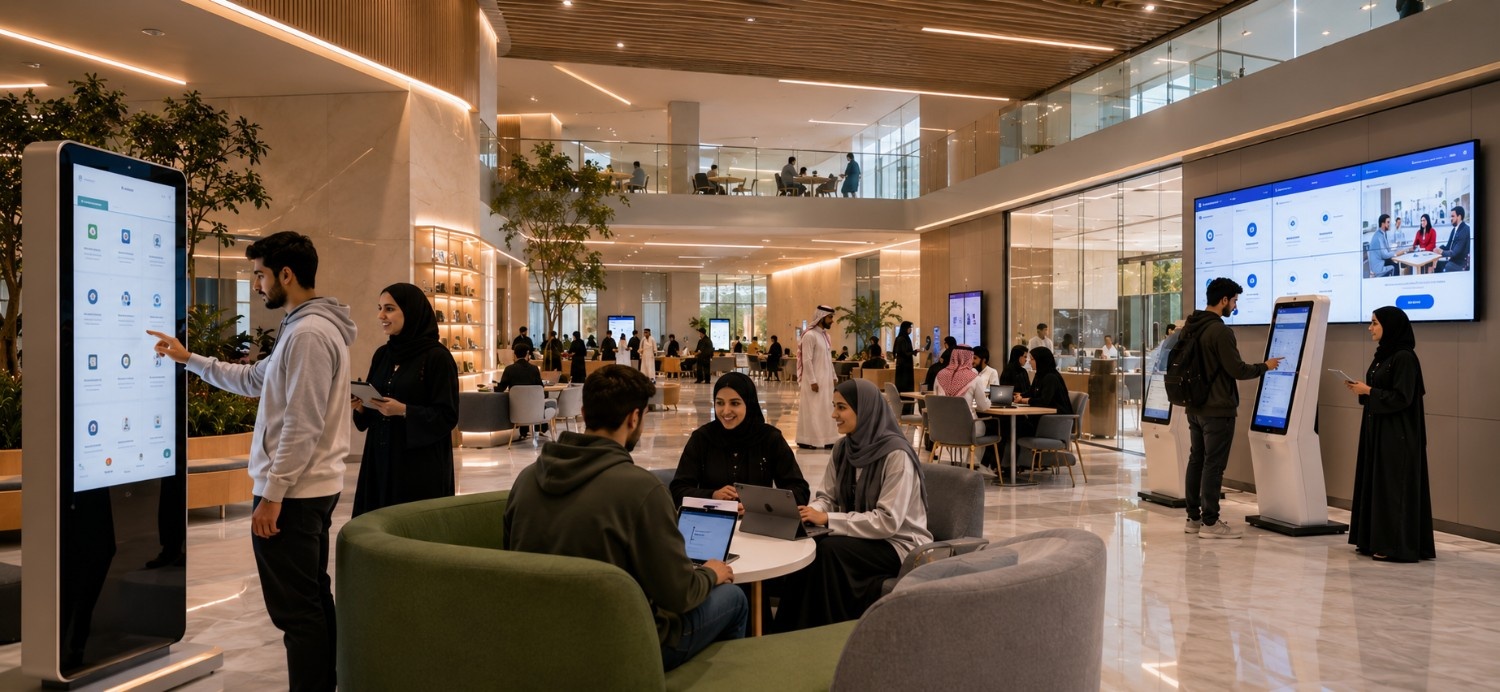
2. Digital Signage
Digital signage extends communication beyond email and websites by delivering relevant information in
High-traffic campus locations.
Institutions can display:
- Student achievements
- Event announcements
- Health awareness campaigns
- Scholarship opportunities
- Volunteer programmes
- Sports fixtures
- Emergency alerts
- Mental wellbeing resources
Dynamic, visually engaging content encourages participation and keeps students informed.
3. AI-Powered Student Assistants
Artificial Intelligence supports student engagement by providing instant access to information at any time.
Virtual assistants can answer common questions about:
- Admissions
- Registration
- Financial aid
- Campus facilities
- Academic regulations
- IT support
- Student services
By handling routine enquiries, AI improves response times while allowing staff to focus on more complex or
Sensitive issues.
4. Digital Signage
Digital signage has become an essential communication platform across educational institutions.
Applications include:
- Campus announcements.
- Timetables.
- Classroom schedules.
- Emergency alerts.
- Event promotions.
- Wayfinding.
- Student achievements
Unlike traditional notice boards, digital signage enables real-time updates from a central content source
management system, ensuring information remains current across multiple campus locations.
5. Learning Analytics
Learning analytics help institutions identify patterns that may indicate disengagement.
Indicators include:
- Declining attendance
- Reduced participation in online learning
- Missed assessments
- Limited use of learning resources
- Changes in academic performance
These insights enable academic advisors to provide timely support before problems escalate.
6. Feedback Platforms
Giving students opportunities to provide feedback strengthens institutional decision-making and
Demonstrates that student perspectives are valued.
Digital feedback systems can collect opinions on:
- Teaching quality
- Campus facilities
- Student services
- Events
- Dining services
- Accommodation
- Digital platforms
Regular analysis helps institutions prioritise improvements and measure the effectiveness of changes over time
time.
Real-World Scenarios
Scenario 1: Supporting First-Year Students
Transitioning into higher education can be challenging. A university introduces a mobile student app that
combines orientation materials, campus maps, academic calendars, event notifications, and appointment
booking with student advisors. AI-powered chat support answers common questions, helping first-year
students navigate university life with greater confidence.
Scenario 2: Promoting Mental Health Awareness
During examination periods, digital signage across campus displays information about counselling services,
stress management workshops, and wellbeing resources. Students can scan QR codes to book confidential
appointments or access self-help materials through the institution’s wellbeing portal.
Scenario 3: Increasing Student Participation
A college launches a student engagement platform that promotes clubs, volunteer opportunities, sports
activities, and career events. Push notifications remind students about registration deadlines, while
participation analytics help student affairs teams understand which activities attract the greatest interest.
Scenario 4: Closing the Feedback Loop
Students regularly complete digital satisfaction surveys after using campus services such as libraries,
finance offices, or academic advising. Results are displayed through executive dashboards, enabling
departments to identify service improvements and respond to recurring concerns.
Creating an Inclusive Digital Campus
Technology should enhance inclusion by ensuring all students can access educational resources and
campus services regardless of ability or background.
Best practices include:
- Accessible web and mobile platforms
- Multilingual content
- Screen-reader compatibility
- Captioned multimedia
- Accessible kiosks
- Inclusive wayfinding
- Digital accessibility standards
- Alternative communication channels
Designing for accessibility benefits the entire campus community and supports equitable access to
education.
Student Engagement and Saudi Vision 2030
Saudi Vision 2030 places significant emphasis on developing a knowledge-based economy through high-
quality education, innovation, and digital transformation. Creating engaging learning environments
supports these objectives by improving educational outcomes, strengthening digital capabilities, and
preparing graduates for the future workforce.
Smart Campus initiatives that enhance communication, accessibility, wellbeing, and personalised support
contribute directly to these national priorities while helping institutions remain competitive in an evolving
education landscape.
How FAMA Technologies Supports Student
Engagement
FAMA Technologies provides integrated education solutions that strengthen student engagement across
The entire campus journey.
Our portfolio includes:
- Digital Signage Solutions
- Interactive Displays
- Student Self-Service Kiosks
- Queue Management Systems
- Mobile Integration
- AI-Powered Information Displays
- Visitor Management
- Smart Wayfinding
- Campus Communication Platforms
- Smart Campus Integration Services
By connecting these technologies into a unified ecosystem, educational institutions can improve
communication, streamline student services, and create more engaging campus experiences.
Looking Ahead
Student engagement will continue to evolve alongside advances in Artificial Intelligence and Extended Reality
(XR), mobile technologies, and predictive analytics. Future campuses are expected to provide increasingly
personalised, data-informed experiences that anticipate student needs while maintaining strong
governance and privacy protections.
Institutions investing in integrated digital platforms today will be well positioned to adopt emerging
technologies as they mature.
Final Thoughts
Student engagement and wellbeing are fundamental to educational success. Modern technology enables
institutions to communicate more effectively, provide timely support, simplify access to services, and build
Stronger campus communities.
By integrating digital communication, AI, analytics, self-service technologies, and student support
platforms, schools, and universities can create inclusive learning environments where students feel
connected, supported, and empowered to succeed.
As educational institutions continue their digital transformation journeys, enhancing student engagement
should remain a strategic priority that complements academic excellence and operational efficiency.
Call to Action
Looking to enhance the student experience across your campus?
FAMA Technologies partners with schools, colleges, and universities to implement integrated digital
solutions that improve communication, engagement, wellbeing, and operational performance.
Contact our Education Solutions team to explore how Smart Campus technologies can create a more
connected and student-centred learning environment.