Introduction
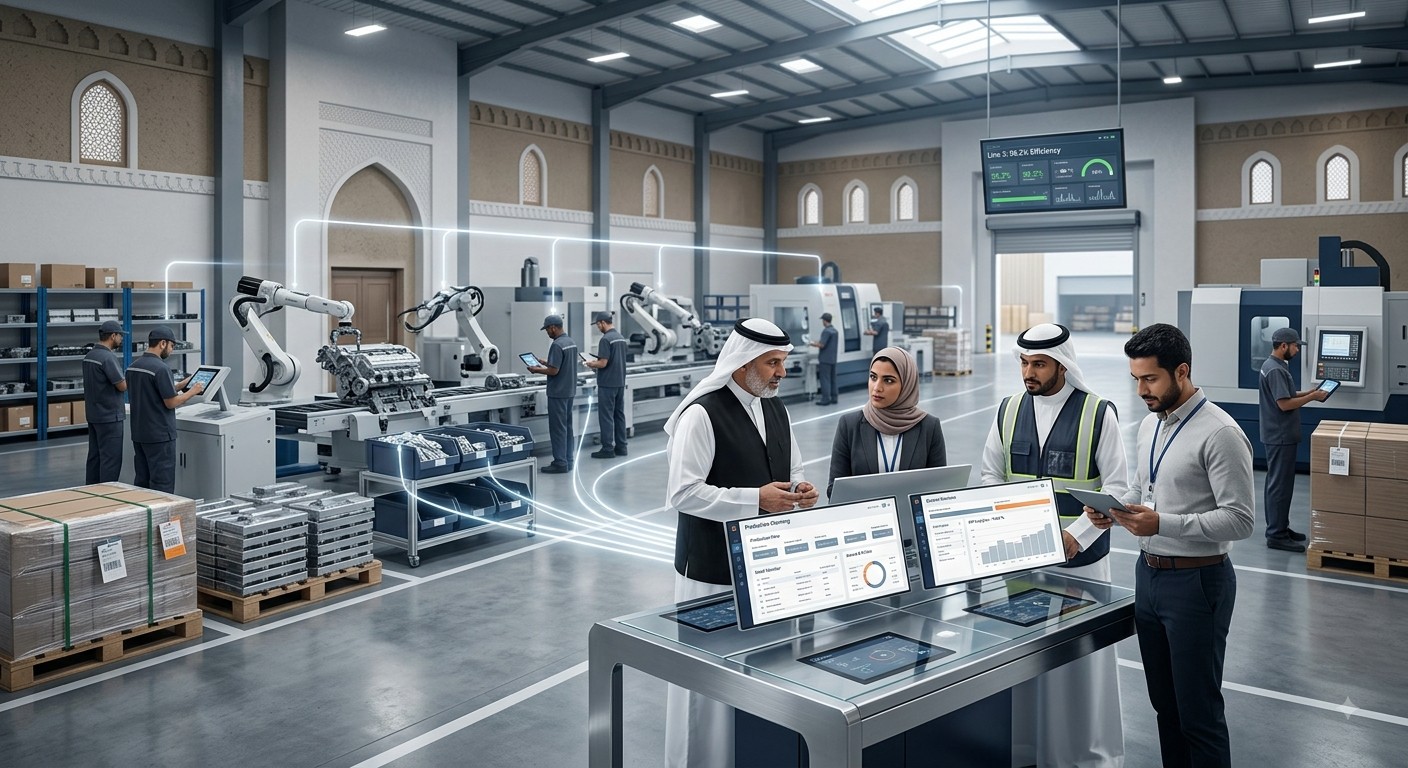
Saudi Arabia’s manufacturing sector is undergoing rapid digital transformation as businesses work toward greater productivity, automation, local production, and supply-chain efficiency. The Kingdom’s National Industrial Strategy and Vision 2030 initiatives are focused on developing a competitive, technology-driven industrial economy.
For manufacturers, managing production, raw materials, inventory, purchasing, quality, maintenance, and finances through disconnected systems can create delays, errors, and unnecessary costs. This is where Odoo ERP for manufacturing companies in Saudi Arabia can make a significant difference.
Odoo provides an integrated platform that connects manufacturing with inventory, purchasing, sales, accounting, quality, maintenance, and other business functions. Its Manufacturing application supports production planning, manufacturing orders, work centers, bills of materials, shop-floor operations, subcontracting, quality processes, and production reporting.
For Saudi manufacturers looking to modernize their operations, Odoo ERP implementation can provide a centralized foundation for improving operational visibility and supporting long-term growth.
Why Do Saudi Manufacturing Companies Need ERP?
Manufacturing involves multiple connected processes. A typical factory may need to manage raw-material purchasing, supplier relationships, warehouse stock, production schedules, machine availability, quality inspections, finished goods, customer orders, and financial transactions.
When these processes are managed using spreadsheets or separate software, information can become fragmented.
An ERP system brings these activities together. With Odoo ERP, manufacturing companies can connect departments through a single system, allowing teams to work with more consistent and up-to-date information.
This is particularly relevant as Saudi Arabia continues investing in advanced manufacturing, industrial infrastructure, localization, and supply-chain development.
How Odoo ERP Supports Manufacturing Companies in Saudi Arabia
1. Production Planning and Scheduling
Production planning becomes easier when manufacturers can manage manufacturing orders, work centers, production schedules, and related resources in one system.
Odoo Manufacturing supports manufacturing orders, work orders, work centers, master production scheduling, dependencies, and production analysis.
This can help production managers understand what needs to be manufactured, when it needs to be completed, and which resources are required.
2. Bill of Materials Management
A Bill of Materials (BoM) defines the components and operations required to manufacture a product.
With Odoo, manufacturers can manage standard, multi-level, and product-variant BoMs. This is useful for businesses producing products with different configurations, sizes, specifications, or components.
Better BoM management can help reduce production errors and improve visibility into material requirements.
3. Real-Time Inventory and Warehouse Management
Raw-material availability directly affects production efficiency.
Odoo connects manufacturing with inventory and warehouse operations, helping businesses monitor materials, components, finished products, and stock movements.
Manufacturers can also use lot and serial number tracking where required, providing greater traceability across inventory and production processes.
For Saudi manufacturing businesses operating multiple warehouses or locations, centralized inventory information can make purchasing and production decisions more efficient.
4. Purchasing and Supplier Management
Manufacturing companies depend on reliable suppliers for raw materials, components, packaging, machinery, and other resources.
Odoo connects purchasing with inventory and manufacturing requirements. This allows businesses to better coordinate purchase orders and material requirements.
For manufacturers using subcontractors, Odoo also supports subcontracting workflows, including managing components sent to subcontractors, incoming goods, and subcontracted production.
5. Quality Control
Maintaining consistent product quality is essential for manufacturers competing in domestic and international markets.
Odoo Manufacturing includes quality control capabilities that can help businesses create quality checks, manage quality alerts, and integrate quality activities into production workflows.
This allows production teams to identify issues earlier instead of discovering problems only after products have reached the warehouse or customer.
6. Maintenance Management
Unexpected equipment downtime can affect production schedules and increase operational costs.
Odoo supports maintenance-related workflows alongside manufacturing, allowing companies to manage equipment and maintenance activities as part of a connected operational system.
This can help manufacturing managers move toward a more organized approach to preventive maintenance and equipment availability.
7. Manufacturing Cost Visibility
Understanding the cost of manufacturing each product is important for pricing, profitability, and production planning.
Odoo provides manufacturing cost functionality and work-in-progress cost tracking, helping manufacturers gain greater visibility into production-related costs.
When manufacturing data is connected with purchasing, inventory, and accounting, management can make decisions using a more complete view of business performance.
Odoo ERP and Saudi Compliance
Another important consideration for businesses in Saudi Arabia is financial and tax compliance.
Odoo provides a Saudi Arabia fiscal localization that supports country-specific accounting requirements. Odoo documentation lists Saudi Arabia among its supported fiscal localizations.
Odoo’s Saudi localization also includes functionality related to VAT and ZATCA e-invoicing processes.
However, manufacturers should configure and validate their ERP environment according to their specific business and compliance requirements rather than assuming that standard configuration alone is sufficient.
Why Choose FAMA Technologies for Odoo ERP Implementation?
Selecting the right implementation partner is just as important as selecting the ERP platform.
FAMA Technologies is an Odoo partner headquartered in Riyadh, Saudi Arabia, offering Odoo ERP implementation, consulting, integration, customization, upgrades, and managed services.
For manufacturing companies, FAMA Technologies can help configure Odoo around business-specific requirements such as MRP, production planning, inventory, purchasing, quality control, maintenance, accounting, and reporting. FAMA also highlights manufacturing-focused Odoo services covering areas such as Bill of Materials, shop-floor control, quality, and maintenance.
A typical implementation approach can include:
- Business process and requirements analysis
- Odoo Manufacturing configuration
- Inventory and warehouse setup
- Bill of Materials and production workflow configuration
- Integration with accounting and purchasing
- Data migration
- User training
- Testing and go-live support
- Ongoing maintenance and technical support
The objective should not simply be to install ERP software. The objective is to create a connected manufacturing environment that supports the company’s actual processes.
Odoo ERP for Different Types of Manufacturers
Choosing an ERP platform is only one part of the process. Implementation, configuration,
Odoo can be configured for various manufacturing environments, including:
- Food and beverage manufacturing
- FMCG manufacturing
- Industrial equipment manufacturing
- Metal and fabrication businesses
- Packaging companies
- Chemical and process-based businesses
- Furniture manufacturing
- Electronics and component manufacturing
- Construction-material manufacturing
- Automotive-related manufacturing
The exact Odoo modules and workflows should depend on the company’s production model, product complexity, inventory requirements, quality processes, and supply-chain structure.
integration, and alignment with business processes are equally important.
FAMA Technologies can support businesses looking to implement technology solutions around their specific operational requirements.
For restaurants and hospitality businesses, an Odoo ERP implementation can be structured around areas such as restaurant POS, inventory, purchasing, accounting, customer management, reporting, and integrations.
For Saudi and GCC businesses, the objective should be more than simply installing an ERP platform. The solution should be configured around the restaurant’s actual workflows, number of branches, service model, operational requirements, and future growth plans.
With the right implementation approach, FAMA Technologies can help businesses move toward a more connected technology environment where restaurant operations and management information work together.
Conclusion
For manufacturing companies in Saudi Arabia, digital transformation is becoming increasingly important for improving productivity, competitiveness, supply-chain resilience, and operational visibility.
Odoo ERP for manufacturing provides an integrated way to connect production, inventory, purchasing, quality, maintenance, sales, and finance. Its manufacturing capabilities include BoM management, manufacturing orders, work centers, production planning, shop-floor operations, subcontracting, quality management, and reporting.
With the right implementation strategy, Odoo can help Saudi manufacturers replace disconnected processes with a more centralized and scalable business management system.
For companies planning an Odoo ERP implementation in Saudi Arabia, FAMA Technologies can provide implementation, customization, integration, training, and ongoing support tailored to business requirements.