Introduction
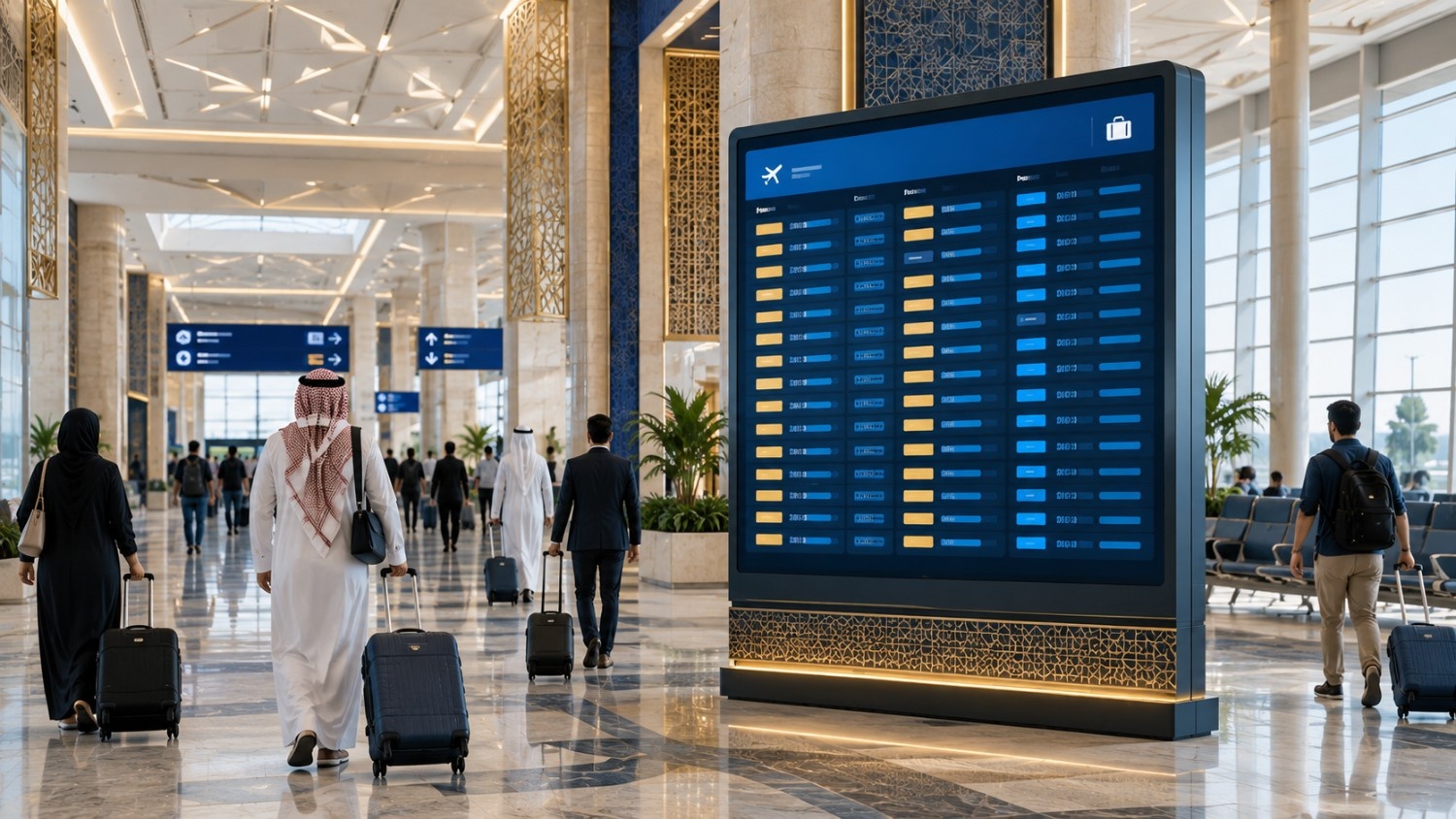
Few environments demand real-time accuracy the way airports do. A flight delay, gate change, or cancellation that isn’t communicated instantly can cause missed connections, crowded gates, and frustrated passengers. Flight Information Display Systems (FIDS) — the digital signage networks that show real-time arrivals, departures, and gate details — have become essential infrastructure for airports of every size across Saudi Arabia.
This guide walks through how flight information display systems actually work and how to set one up, with insight from FAMA Technologies, a Middle East digital signage and infinite digital solutions provider.
Why Real-Time Flight Information Displays Matter in Saudi Arabia
Saudi Arabia’s aviation sector is expanding fast, driven by Vision 2030 initiatives, growing passenger numbers, and major hub airports in Riyadh, Jeddah, and Dammam. This growth brings specific operational demands:
- High passenger volumes, especially during Hajj and Umrah seasons, when accurate real-time information is critical
- Multi-terminal, multi-gate complexity that makes static signage impossible to keep updated manually
- Bilingual passenger base — Arabic and English (and often other languages) need to be displayed clearly
- Integration with airline and airport operational systems for true real-time accuracy, not just scheduled updates
A properly implemented FIDS reduces passenger stress, minimizes staff workload from repeated verbal announcements, and creates a more professional, modern impression of the airport itself.
Step-by-Step: Setting Up Digital Signage for Flight Information Displays
Step 1: Map Passenger Flow and Display Points
Start by identifying where passengers most need flight information: main terminal entrances, check-in halls, security checkpoints, departure lounges, and individual gate areas. FAMA Technologies conducts on-site assessments to determine optimal screen placement based on real passenger movement patterns, not just available wall space.
Step 2: Select the Right Display Hardware for Each Zone
Different zones require different display specifications:
- Large-format video walls for main terminal halls, showing consolidated arrival/departure boards
- Individual gate displays for flight-specific, real-time boarding status
- High-brightness outdoor screens for curbside or drop-off areas exposed to daylight
Choosing display hardware suited to ambient lighting and viewing distance in each zone ensures readability at all times of day.
Step 3: Integrate with Airport Operational Data Systems
This is the technical core of any FIDS. The digital signage system must connect to the airport’s operational data flight schedules, gate assignments, delay status, and baggage claim information — typically through an Airport Operational Database (AODB) or similar data feed. FAMA Technologies works with airport IT teams to establish these integrations so information updates automatically, without manual entry.
Step 4: Set Up a Centralized Content Management System (CMS)
This is the most important technical step. A cloud-based CMS allows campus administrators to update content across every screen from a single dashboard no need to access each display physically. FAMA Technologies’ Infinite Digital CMS is built for exactly this kind of multi-screen, multi-location deployment, supporting scheduled content, real-time push updates, and remote management from anywhere.
Step 5: Design Clear, Bilingual Display Templates
Flight information should be displayed in a clean, standardized format — flight number, destination, gate, status, and time — readable at a glance from a distance. Templates should support Arabic and English simultaneously, following international airport display conventions that passengers are already familiar with.
Step 6: Configure Automated Alerts for Delays and Gate Changes
Beyond routine schedule display, the system should automatically highlight delays, cancellations, and last-minute gate changes with visual cues (color changes, flashing indicators) so passengers notice critical updates immediately, without needing to read every line.
Step 7: Test for Redundancy and Uptime
Airport signage cannot afford downtime. Before going live, test failover systems, backup connectivity, and screen redundancy so that a single network or hardware failure doesn’t take down critical information displays during peak travel periods, including Hajj and Umrah seasons.
Step 8: Train Staff and Establish Ongoing Monitoring
Airport operations staff need clear processes for manual overrides (e.g., gate changes not yet reflected in the data feed) and should have visibility into system health. FAMA Technologies provides training and offers ongoing monitoring and maintenance support to keep displays accurate and operational around the clock.
Why Choose FAMA Technologies for Airport Digital Signage in Saudi Arabia
FAMA Technologies brings region-specific deployment experience to large-scale digital signage projects:
- Real-time data integration expertise — connecting digital signage to operational systems for accurate, automated updates
- Bilingual, internationally-familiar display templates — Arabic and English formatting passengers instantly understand
- Scalable infrastructure — from single-gate displays to full-terminal video wall networks
- Local support presence — teams accessible across Riyadh, Jeddah, and Dammam
- Built for high-traffic seasons — systems designed to handle the passenger surges of Hajj and Umrah periods
For airport authorities and aviation service providers evaluating a flight information display system in Saudi Arabia, FAMA Technologies offers both the technical depth and regional experience required for mission-critical infrastructure.
Common Mistakes to Avoid
- Deploying screens without integrating real operational data feeds, leaving displays reliant on manual updates
- Choosing hardware not rated for the brightness or environmental conditions of each specific zone
- Underestimating redundancy needs, risking full display outages during peak travel periods
- Skipping bilingual template design, reducing clarity for the local passenger base
Conclusion
A well-integrated flight information display system does more than show departure times — it shapes how organized and modern an airport feels to every passenger who passes through it. With Saudi Arabia’s aviation sector growing rapidly, real-time, reliable, bilingual digital signage has become essential infrastructure rather than a nice-to-have. FAMA Technologies brings the technical integration expertise and regional deployment experience needed to implement it correctly.
Take the Next Step
Planning a flight information display system or airport-wide digital signage upgrade? FAMA Technologies is ready to help, from data integration to full-scale deployment. Get in touch today for a free digital signage consultation tailored to your airport project in Saudi Arabia. Contact FAMA Technologies