Introduction
Government offices increasingly rely on meetings that connect departments, regional branches, external stakeholders, and remote teams. As administrative operations become more distributed, traditional meeting rooms must evolve to support secure, reliable, and efficient communication.
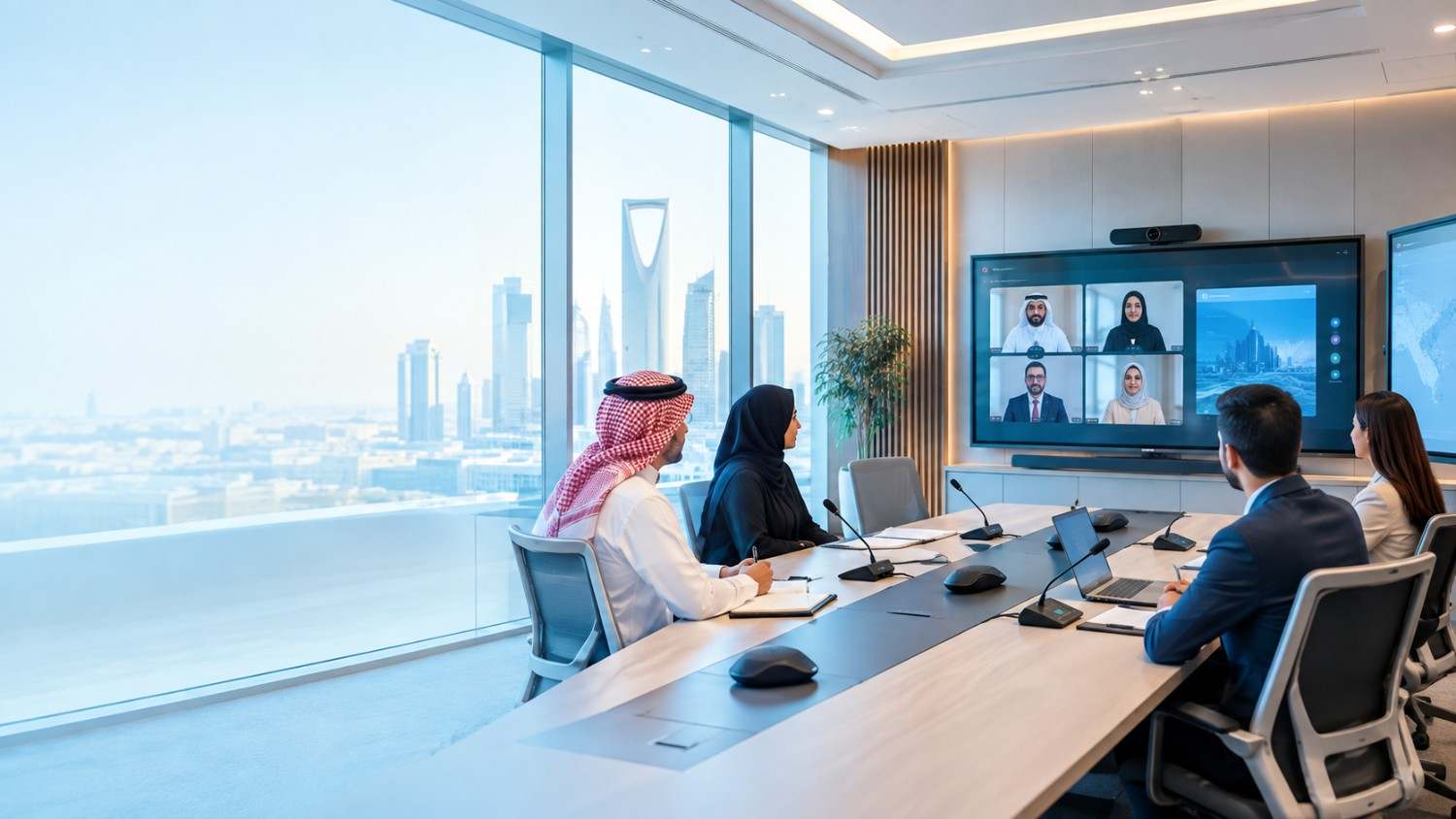
Modern government meeting room solutions combine video conferencing, professional audio, smart displays, presentation systems, and room-management tools to create connected collaboration spaces. These technologies help government organizations conduct hybrid meetings, share information clearly, and coordinate activities without requiring every participant to be physically present.
However, government environments have unique requirements. Meetings may involve confidential discussions, sensitive documents, multiple departments, and participants joining from different locations. This makes security, reliability, usability, and scalability essential when designing government conference room solutions.
Why Government Offices Need Modern Meeting Rooms
Government departments often coordinate across ministries, administrative offices, municipal bodies, regional branches, and field locations. Requiring every participant to travel for routine meetings can consume time and resources while delaying decisions.
Government video conferencing helps bridge these distances by enabling participants to communicate in real time from different locations. A well-designed meeting room can support:
- Hybrid meetings with in-room and remote participants
- Inter-department coordination
- Remote meetings with regional and district offices
- Presentations and document sharing
- Administrative reviews and project discussions
- Training sessions and briefings
- Communication with authorized external stakeholders
The goal is not simply to install a camera and display. It is to create an integrated environment where technology supports the way government teams work.
What Are Government Meeting Room Solutions?
Government meeting room solutions are integrated technology setups designed to support meetings, presentations, and collaboration in government offices. Depending on the room’s size and purpose, a solution may include:
- Professional video conferencing systems
- High-definition cameras
- Conference microphones and speakers
- Commercial displays or interactive smart boards
- Wireless presentation systems
- Video walls or multi-display configurations
- Room scheduling and management tools
- Centralized device and system management
- Secure network and access configurations
These components work together to reduce technical complexity. Instead of managing multiple disconnected devices, users can enter a room, start a meeting, share content, and communicate with remote participants through a coordinated system.
Secure Video Conferencing for Government Offices
Security is one of the most important considerations when implementing secure video conferencing for government. Government meetings may involve internal policies, citizen information, infrastructure plans, procurement discussions, or other sensitive material.
A secure meeting-room design should consider several layers of protection.
1. Secure Communication Platforms
The video conferencing platform should support appropriate security controls, including encryption, authentication, access management, and administrative policies. Government organizations should evaluate whether the platform aligns with their data-protection requirements and internal security standards.
2. Controlled Meeting Access
Meeting links, room systems, and participant permissions should be managed carefully. Features such as authenticated access, waiting rooms, host controls, and meeting-level permissions can help prevent unauthorized participation.
3. Network and Device Security
Cameras, microphones, displays, and room controllers are connected devices that require appropriate network segmentation, updates, access restrictions, and monitoring. Security should extend beyond the conferencing application to the entire meeting-room environment.
4. Privacy and Data Governance
Before selecting a solution, government IT teams should understand how meeting data is processed, stored, and managed. Data residency, retention policies, recording permissions, and administrative access may be relevant depending on the meeting’s sensitivity and applicable regulations.
A technology provider can support implementation, but government organizations should establish their own security policies and conduct the necessary compliance and risk assessments.
Supporting Inter-Department Communication
Government work often depends on collaboration between departments with different responsibilities. A finance team may need to coordinate with administration, infrastructure, legal, healthcare, education, or local-government offices.
Video conferencing solutions for government make these interactions more efficient by enabling teams to meet without being in the same building. Integrated room systems allow participants to:
- Hear speakers clearly without repeatedly adjusting microphones
- View remote participants at an appropriate scale
- Share presentations, reports, and dashboards
- Switch between content sources smoothly
- Collaborate using interactive displays or smart boards
- Maintain consistent meeting workflows across departments
This is particularly useful for organizations operating across multiple offices or administrative regions.
High-Quality Audio and Video Matter
Poor audio is one of the most common causes of ineffective virtual meetings. Delayed speech, background noise, echo, and unclear voices can make discussions difficult to follow—especially when meetings involve formal presentations or multiple speakers.
Effective government conference room solutions should include audio and video equipment suited to the room’s dimensions and seating arrangement.
Important considerations include:
- Microphone pickup coverage
- Echo cancellation and noise reduction
- Speaker placement
- Camera framing and viewing angles
- Lighting and room acoustics
- Display size and viewing distance
- Compatibility with the selected conferencing platform
For larger rooms, multiple microphones, tracking cameras, and distributed speakers may be necessary. For smaller rooms, a compact integrated system may provide an efficient setup without unnecessary complexity.
Smart Displays and Presentation Systems
Government meetings frequently involve documents, policy presentations, data dashboards, maps, project plans, and reports. A clear presentation system is therefore central to effective collaboration.
Smart meeting rooms for government may use large professional displays, interactive flat panels, wireless presentation systems, or multi-screen configurations. These tools can help participants view information more clearly and collaborate with both in-room and remote colleagues.
Interactive smart boards can also support annotation, brainstorming, and live explanation of diagrams or plans. The right choice depends on whether the room is primarily used for formal meetings, collaborative workshops, training, or presentations.
Room Scheduling and Management
As meeting rooms become shared resources, scheduling can become a challenge. Teams may struggle to identify available rooms, avoid double bookings, or understand whether a room is equipped for a particular meeting.
Room-management capabilities can improve this experience through:
- Room availability displays
- Calendar integration
- Meeting-room booking
- Occupancy visibility
- Centralized device monitoring
- Usage reporting
- Simplified room-start controls
These features help organizations use meeting spaces more efficiently and reduce time spent resolving scheduling or technical issues.
Choosing Solutions Based on Room Size
A key consideration when planning government meeting room solutions is the size and intended use of the room. A system designed for a small meeting room may not provide sufficient microphone coverage or display visibility in a large conference hall.
Small Meeting Rooms :
Small rooms used by a few participants may need a compact video conferencing system, a suitable display, a camera, and an integrated microphone-speaker setup. Simplicity and ease of use are especially important.
Medium Meeting Rooms :
Medium-sized rooms often require wider camera coverage, improved microphone placement, larger displays, and presentation-sharing capabilities. These rooms may support departmental meetings, project reviews, and hybrid team discussions.
Large Conference Rooms and Boardrooms :
Large government meeting rooms may require multiple displays, advanced camera systems, several microphones, professional audio processing, and flexible presentation configurations. Room acoustics, cable management, and centralized control become increasingly important.
Training Rooms and Multipurpose Spaces :
Rooms used for training, workshops, and public-sector collaboration may benefit from interactive displays, wireless presentation, recording capabilities, and flexible layouts.
FAMA Technologies offers meeting-room solutions organized around different room sizes, helping organizations select integrated setups that can include video conferencing, displays, microphones, smart boards, and room-management capabilities. This room-based approach allows government offices to align technology with the space’s actual requirements rather than adopting a one-size-fits-all system.
Important Factors When Designing Government Meeting Rooms
Before implementing a meeting-room solution, government organizations should evaluate the following:
- Room size and seating layout: Equipment must support clear communication for everyone in the room.
- Meeting purpose: A boardroom, training room, and collaborative workspace may require different technologies.
- Security requirements: Assess access controls, platform security, network protection, and data-handling policies.
- Ease of use: Staff should be able to start and manage meetings without extensive technical assistance.
- Interoperability: Systems should work with the organization’s approved conferencing platforms and existing IT environment.
- Scalability: Solutions should support future expansion across departments or locations.
- Support and maintenance: Reliable service, updates, and technical support are essential for operational continuity.
- Accessibility: Consider clear audio, readable displays, captions where supported, and inclusive room design.
Building a More Connected Government Workplace
Modern government offices need meeting environments that support both physical and remote collaboration. With the right combination of secure conferencing, professional audio, visual presentation tools, and room-management capabilities, meeting spaces can become more reliable and productive.
The most effective approach is to design around actual workflows, security needs, room dimensions, and future requirements. By partnering with an experienced technology provider such as FAMA Technologies, government organizations can explore integrated meeting-room solutions that support different room sizes and collaboration needs.
As hybrid work and distributed administration continue to develop, investing in thoughtfully designed government meeting room solutions can help public-sector teams communicate more effectively while maintaining the security and operational standards their work demands.