Introduction
For restaurants and quick-service restaurants (QSRs), increasing order value is not always about raising prices or adding more products. Often, the opportunity is already available in the menu—but customers may not notice the right add-ons, combos, upgrades, or high-margin items at the right moment.
This is where dynamic digital menu boards can make a difference.
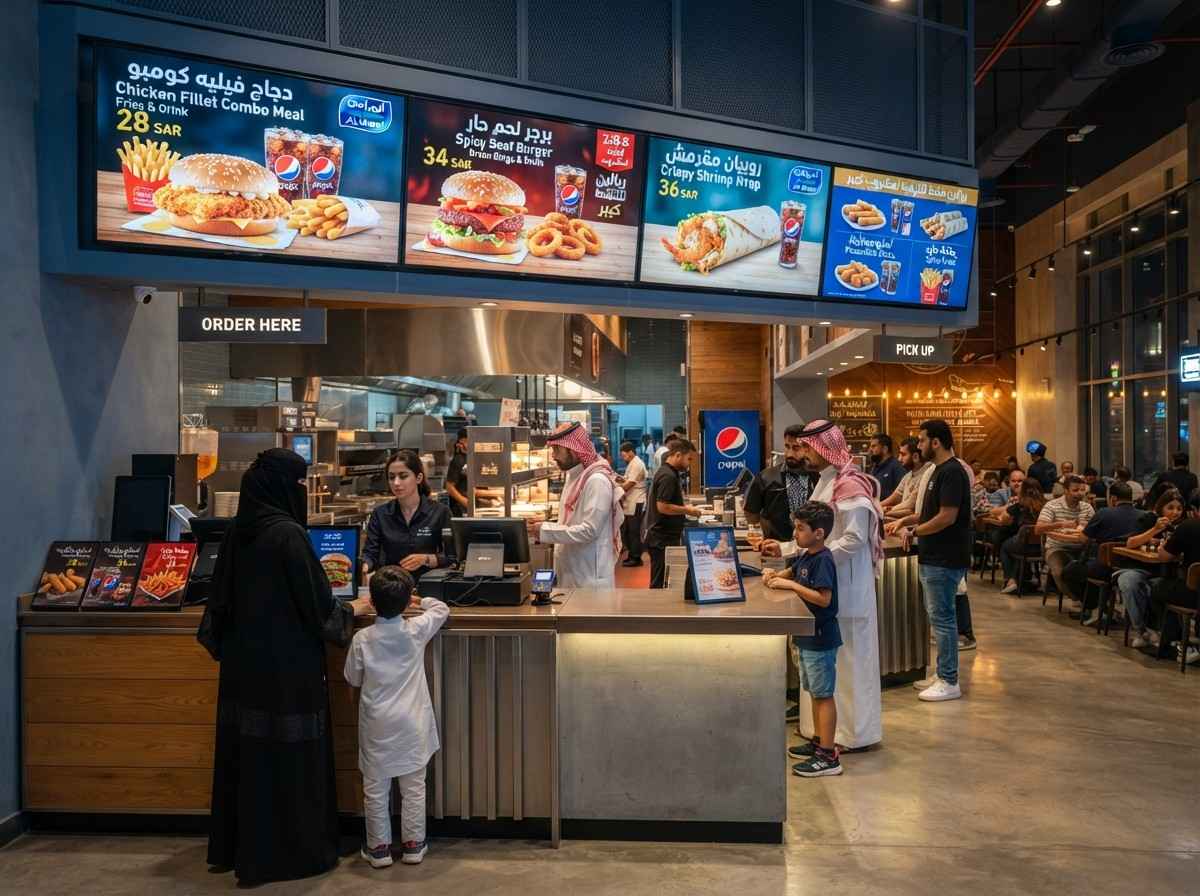
Unlike traditional static menu boards, digital menu boards allow restaurants to update products, prices, promotions, images, and offers remotely. More importantly, they can help businesses organize and present menu content strategically throughout the customer journey.
With the right restaurant digital signage strategy, restaurants can use digital menu boards to highlight complementary products, promote limited-time offers, showcase combos, and encourage customers to consider additional items before completing their orders.
What Are Dynamic Digital Menu Boards?
Dynamic digital menu boards are digital displays used by restaurants and QSRs to present menus, products, prices, promotions, and other customer-facing content.
Instead of relying on printed menus or fixed graphics, restaurant teams can manage digital content through a centralized system and make changes when required.
For example, a restaurant could display:
- Breakfast items during morning hours
- Lunch combos during midday
- Family meals during peak evening periods
- Desserts and beverages alongside relevant meals
- Limited-time promotions during specific campaigns
- High-margin products in prominent menu positions
This flexibility makes digital menu boards for restaurants useful not only for displaying menus but also for supporting merchandising and upselling strategies.
How Digital Menu Boards Support Restaurant Upselling
Upselling means encouraging customers to purchase a higher-value option or add additional products to their order.
For example, instead of ordering a burger alone, a customer may choose a burger combo with fries and a beverage. Similarly, a customer ordering a meal may be encouraged to add a dessert.
Dynamic menu boards can support this process by making these options more visible.
1. Highlight Combos and Meal Upgrades
One of the simplest ways to use a digital menu board for upselling is to make combo options highly visible.
Instead of presenting individual products separately, restaurants can visually communicate the value of a complete meal.
A digital menu could show:
Burger + Fries + Beverage = Meal Combo
High-quality product imagery combined with clear pricing can help customers quickly understand what they receive with the upgrade.
For QSRs, this can be particularly useful during busy ordering periods when customers need to make decisions quickly.
2. Promote Relevant Add-Ons
Digital menu boards can also be used to promote complementary products.
For example:
- Burger → Add fries
- Pizza → Add a beverage
- Coffee → Add a pastry
- Chicken meal → Add a dessert
- Family meal → Add additional sides
Rather than displaying every possible product equally, restaurants can structure their digital menu content to encourage relevant additions.
The goal is not simply to display more products—it is to present the right products at the right point in the decision-making process.
3. Give High-Margin Products More Visibility
Restaurants often have products with different margins and sales priorities.
A dynamic menu board allows businesses to give additional visibility to selected products through:
- Larger product visuals
- Featured sections
- Promotional banners
- Combo positioning
- Limited-time messaging
- Product highlights
For example, if a restaurant wants to promote a particular beverage or premium combo, that product can receive greater visual prominence than lower-priority menu items.
This creates an opportunity to align restaurant upselling with broader business objectives.
Use Dayparting to Match Promotions With Customer Needs
One of the biggest advantages of dynamic menu boards is the ability to change content according to time of day.
This is commonly known as dayparting.
A restaurant can schedule different menu content for different periods, such as:
Morning:
Breakfast meals, coffee, pastries and breakfast combos
Afternoon:
Lunch meals, value combos and beverages
Evening:
Family meals, dinner combos and larger portions
Late Night:
Late-night meals, snacks and promotional offers
Instead of manually changing displays, restaurant teams can schedule content through a digital signage CMS.
For businesses operating multiple locations, centralized scheduling can make this process even more efficient.
Promote Limited-Time Offers More Effectively
Limited-time offers depend heavily on visibility and timing.
A printed menu may require physical replacement, while a dynamic digital menu board can be updated remotely.
Restaurants can use digital displays to promote:
- Seasonal products
- New menu launches
- Special combos
- Weekend promotions
- Festive offers
- Limited-time products
- Promotional pricing
This allows restaurant teams to keep their customer-facing content more relevant without repeatedly redesigning and replacing printed materials.
Use Visual Content to Influence Product Discovery
Food is highly visual, which makes digital displays particularly useful for restaurant merchandising.
A well-designed menu board can combine:
- High-quality food photography
- Short product descriptions
- Clear pricing
- Promotional messaging
- Product categories
- Combo recommendations
- Calls to action
For example, instead of simply displaying “Chocolate Cake,” a restaurant could feature a visually prominent dessert section with a short promotional message.
The objective is to make customers aware of products they may not have initially planned to order.
Centralized Management for Multi-Location Restaurants
Managing digital menu content becomes more complicated when a restaurant brand operates multiple branches.
Different locations may have different:
- Menus
- Prices
- Promotions
- Operating hours
- Product availability
- Regional offers
A centralized digital signage CMS can help restaurant teams manage content across multiple screens and locations.
With a solution such as FAMA Technologies’ Infinite Digital, businesses can manage digital signage content centrally and distribute updates across connected displays.
This can help reduce the need for manual content changes at individual locations while supporting more consistent brand communication.
Dynamic Menu Boards Can Support a Better Customer Experience
Upselling should not make the ordering experience confusing.
A good restaurant digital menu board should make it easier for customers to understand their options rather than overwhelming them with information.
Effective menu content should be:
- Easy to scan
- Visually clear
- Well organized
- Relevant to the current daypart
- Consistent with the restaurant brand
- Focused on key products and offers
When upselling is integrated naturally into the menu experience, customers can discover useful combinations and complementary products without navigating a complicated ordering process.
How FAMA Technologies Supports Digital Signage for Restaurants
FAMA Technologies provides digital signage solutions designed to help businesses manage and deliver content across digital displays.
Through Infinite Digital, restaurants and QSRs can use digital signage to support dynamic menu boards, promotional content, centralized management and remote content updates.
For restaurant chains and multi-location businesses, this approach can help create a more manageable digital menu environment where content can be updated according to business requirements.
Combined with a well-planned menu board content strategy, digital signage can become more than a replacement for printed menus—it can become part of the restaurant’s customer engagement and merchandising strategy.
Best Practices for Digital Menu Board Upselling
To get better results from dynamic menu boards, restaurants should consider the following:
Keep the menu easy to scan: Avoid overcrowding the screen with too many products.
Use strong product visuals: Food photography can help attract attention to selected products.
Promote logical combinations: Recommend add-ons that naturally complement the customer’s primary purchase.
Use dayparting: Display breakfast, lunch, dinner and other relevant promotions at appropriate times.
Highlight selected products: Give strategic visibility to priority or high-margin items.
Update content regularly: Keep promotions, prices and product availability current.
Maintain brand consistency: Use consistent layouts, typography and visual guidelines across locations.
Measure performance: Where data is available, compare product sales, order value and promotional performance to understand which strategies are working.
Conclusion
Dynamic digital menu boards give restaurants and QSRs greater flexibility to present products, promotions and upselling opportunities in a more relevant way.
From promoting combos and add-ons to highlighting high-margin products and using dayparting, digital menu boards can support a more strategic approach to restaurant merchandising.
For multi-location restaurant businesses, centralized digital signage management can also simplify content updates and help maintain consistent communication across different branches.
With solutions such as FAMA Technologies‘ Infinite Digital, businesses can build a more flexible digital signage environment for managing restaurant menus, promotions and customer-facing content.
The key is not simply putting a menu on a screen. The real opportunity lies in using dynamic menu content strategically—showing the right product, promotion or upsell at the right time.