Introduction
Healthcare delivery increasingly depends on collaboration—not only between doctors and patients, but also among specialists, departments, clinics, and medical teams. Whether a hospital is coordinating a remote consultation, discussing a complex case, or conducting a medical team meeting, reliable communication plays an important role in supporting timely decisions.
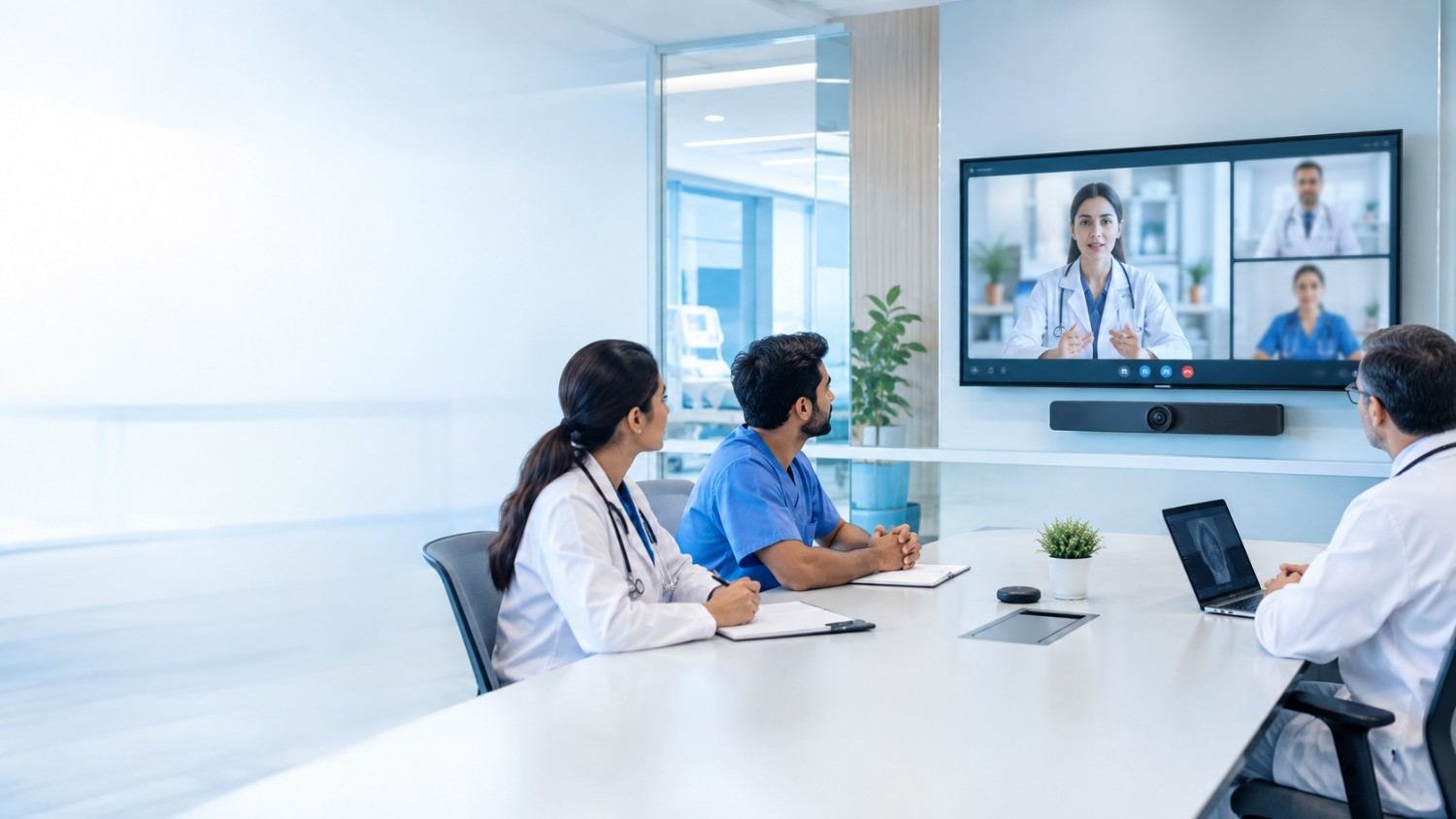
This is where healthcare video conferencing solutions become valuable. By combining high-quality video, clear audio, smart meeting room technology, and secure communication infrastructure, healthcare organizations can connect medical professionals across locations without requiring everyone to be physically present in the same room.
For hospitals and clinics looking to modernize their communication environment, FAMA Technologies provides healthcare infrastructure and collaboration solutions that can support video conferencing, smart meeting rooms, and unified communication requirements.
What Is Healthcare Video Conferencing?
Healthcare video conferencing is the use of video and audio communication technology to connect healthcare professionals, patients, and medical teams remotely. Unlike ordinary video calls, healthcare-focused systems are designed around the communication demands of hospitals, clinics, and medical environments.
Depending on the use case, a healthcare video conferencing system may include:
- HD or 4K cameras
- Professional microphones and speakers
- Large-format displays
- Video conferencing platforms
- Wireless presentation systems
- Smart meeting room controls
- Secure network connectivity
- Integration with wider communication infrastructure
These components work together to create a more effective environment for remote consultations, specialist discussions, departmental meetings, and healthcare collaboration.
1. Supporting Remote Doctor Consultations
One of the most recognized applications of telemedicine video conferencing is remote doctor consultation. Patients in smaller clinics, rural healthcare facilities, or locations without access to certain specialists may benefit from being connected to medical professionals in another location.
With a suitable video conferencing setup, doctors can communicate through live video and audio, discuss symptoms, review available information, and determine appropriate next steps. In certain clinical environments, video consultations may also be supported by compatible diagnostic peripherals, depending on the healthcare provider’s requirements.
However, video conferencing does not replace every aspect of an in-person examination. Its role depends on the medical situation, available equipment, clinical protocols, and applicable regulations.
For healthcare organizations, the objective is to create a dependable communication channel that supports—not substitutes for—professional clinical judgment.
2. Enabling Specialist Collaboration
Complex medical cases often require input from multiple specialists. A physician may need to consult a cardiologist, neurologist, radiologist, surgeon, or another expert who is working at a different hospital or location.
Medical video conferencing makes these interactions more accessible by allowing specialists to connect virtually for case discussions and consultations.
Key benefits can include:
- Faster access to specialist expertise
- Reduced need for unnecessary travel
- Better coordination between referring and consulting doctors
- Support for multidisciplinary discussions
- More convenient communication between healthcare facilities
When the system delivers clear video and reliable audio, participants can communicate more effectively, helping ensure that important details are easier to hear, see, and discuss.
3. Improving Doctor-to-Doctor Communication
Healthcare communication is not limited to patient consultations. Doctors and medical teams regularly need to exchange information, coordinate care, discuss procedures, and communicate with colleagues across departments or facilities.
A hospital video conferencing system can support doctor-to-doctor communication through scheduled meetings, remote discussions, and virtual collaboration sessions.
For example, a hospital may use video conferencing to connect:
- A primary physician with an off-site specialist
- A hospital department with a satellite clinic
- A medical team with a visiting consultant
- Senior clinicians with teams at another branch
- Healthcare administrators with clinical leadership
This can help reduce communication gaps and create a more connected working environment.
4. Connecting Hospital Departments and Medical Teams
Large healthcare organizations often operate across multiple departments, buildings, and locations. Coordinating these teams through disconnected communication tools can create unnecessary complexity.
Video conferencing for hospitals can support regular communication between departments such as emergency care, surgery, radiology, administration, and clinical support services.
Common use cases include:
- Departmental meetings
- Multidisciplinary team discussions
- Clinical coordination sessions
- Training and knowledge-sharing meetings
- Operational planning
- Remote leadership meetings
When video conferencing is integrated into smart meeting rooms, teams can start meetings more efficiently, share presentations, and communicate using a consistent technology environment.
5. The Importance of High-Quality Video and Audio
In healthcare environments, communication quality matters. Poor audio, delayed video, or unclear visuals can make discussions frustrating and may cause participants to miss important information.
A reliable healthcare video conferencing solution should therefore prioritize:
Clear Video :
High-definition cameras help participants see one another clearly. In consultation and collaboration environments, suitable camera positioning, lighting, and display quality also contribute to a more effective experience.
Professional Audio :
Microphones should capture speech clearly, while speakers should reproduce voices without excessive distortion or echo. Echo cancellation and noise management can be particularly useful in meeting rooms.
Stable Connectivity :
A dependable network infrastructure helps support consistent video and audio performance. Healthcare organizations should assess bandwidth, network reliability, and security requirements before deployment.
Simple User Experience :
Medical professionals should be able to join meetings, share content, and manage calls without unnecessary technical complexity. Intuitive controls can improve adoption across departments.
6. Smart Meeting Rooms for Healthcare
Modern healthcare facilities are increasingly adopting smart meeting rooms to support both clinical and administrative collaboration. These rooms combine displays, cameras, microphones, speakers, and room-control technologies into a coordinated environment.
A smart healthcare meeting room may support:
- One-touch meeting access
- Automated camera framing
- Wireless content sharing
- Large-screen presentations
- Remote participant communication
- Integrated audio systems
- Room scheduling and management
For example, a hospital’s conference room could be used for a specialist consultation in the morning, a medical training session in the afternoon, and an administrative meeting later in the day.
FAMA Technologies’ healthcare infrastructure approach can naturally connect these meeting room capabilities with broader communication and technology requirements, helping organizations plan a more unified environment rather than treating each device as an isolated purchase.
7. Security and Privacy Considerations
Healthcare communication involves sensitive information, so security should be a central consideration when selecting healthcare collaboration solutions.
Organizations should evaluate whether a solution supports their applicable privacy, security, and compliance requirements. Important areas to review include:
- Secure user authentication
- Access controls and meeting permissions
- Encryption capabilities
- Protected network connectivity
- Device management
- Software update processes
- Data handling and storage policies
- Vendor security practices
The exact requirements vary by country, healthcare organization, and use case. A video conferencing system should be selected as part of a broader security and governance framework—not evaluated only on camera quality or meeting features.
8. Integrating Video Conferencing with Healthcare Infrastructure
Video conferencing works best when it fits into the organization’s wider technology environment. Hospitals may already rely on structured cabling, enterprise networks, unified communication platforms, displays, digital signage, access systems, and other IT infrastructure.
A well-planned hospital video conferencing system should consider how these components interact.
FAMA Technologies can support healthcare organizations in evaluating communication and infrastructure requirements, including:
- Video conferencing systems
- Smart meeting room solutions
- Unified communication environments
- Professional audio-visual equipment
- Network and IT infrastructure
- Display and presentation technologies
This integrated approach can help organizations build communication spaces that are easier to manage, more consistent across locations, and aligned with their operational needs.
Choosing the Right Healthcare Video Conferencing Solution
Before investing in a healthcare video conferencing system, organizations should assess several practical factors:
- Use case: Is the system intended for telemedicine, specialist collaboration, internal meetings, or multiple applications?
- Room size: Does the space require a compact video bar, a medium-room setup, or a larger conference system?
- Audio coverage: Can all participants be heard clearly from their seating positions?
- Camera capabilities: Does the camera provide an appropriate field of view, framing, and image quality?
- Platform compatibility: Will the solution work with the organization’s preferred communication platforms?
- Security requirements: Does it align with internal policies and applicable healthcare regulations?
- Scalability: Can the system be expanded across additional departments or locations?
- Support and maintenance: Is professional installation, training, and ongoing support available?
The right solution should balance communication quality, usability, security, and long-term infrastructure compatibility.
Conclusion
Healthcare video conferencing solutions are becoming an important part of modern healthcare communication. From remote doctor consultations and specialist collaboration to departmental meetings and smart healthcare meeting rooms, these systems help connect people across physical distances.
For hospitals and clinics, the greatest value comes from deploying video conferencing as part of a broader communication and infrastructure strategy. With the right combination of reliable technology, secure connectivity, and professional implementation, healthcare organizations can create more connected and collaborative working environments.
FAMA Technologies helps businesses and healthcare organizations explore technology infrastructure and communication solutions designed to support modern operational requirements.