Introduction
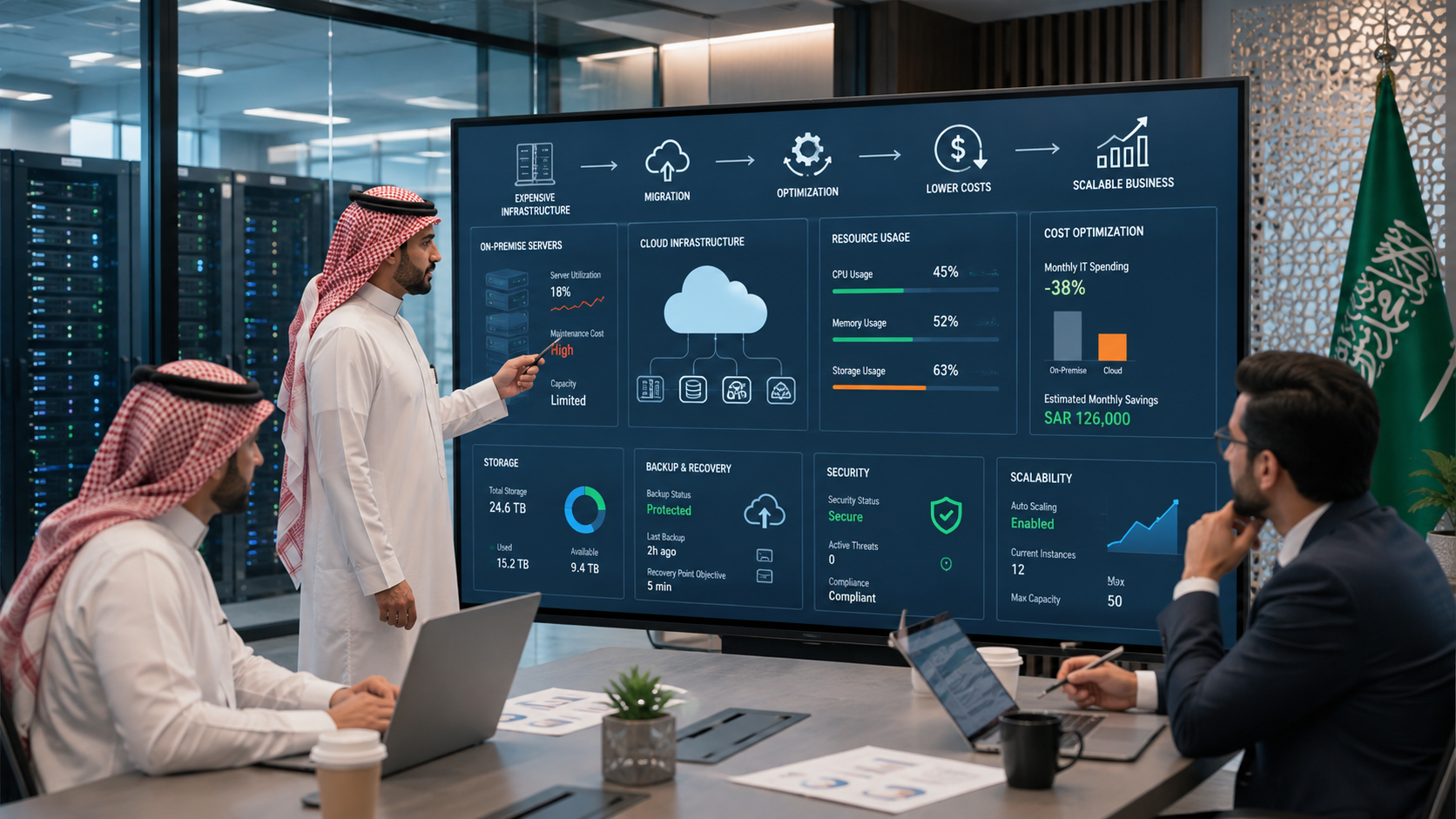
Managing IT infrastructure can become increasingly expensive as a business grows. Companies often need to invest in physical servers, storage systems, networking equipment, backup infrastructure, software, cooling, maintenance, and IT personnel. At the same time, businesses need technology that can scale quickly when demand increases.
This is where cloud solutions for businesses can provide a more flexible approach to IT infrastructure.
Instead of purchasing and maintaining all computing resources on-site, organizations can use cloud infrastructure to access computing, storage, networking, backup, and other resources according to their requirements.
For growing businesses, this can help reduce unnecessary infrastructure spending while providing the scalability needed for future growth.
What Are Cloud Solutions?
Cloud solutions allow businesses to access IT resources through cloud-based infrastructure rather than relying entirely on physical infrastructure at their own facilities.
Depending on business requirements, cloud environments can provide:
- Cloud computing resources
- Virtual servers
- Cloud storage
- Networking
- Database services
- Backup and disaster recovery
- Security services
- Application infrastructure
- Monitoring and management
Cloud environments can also support different deployment models, including public, private, and hybrid cloud infrastructure.
However, cost savings should not be the only reason for adopting cloud technology. The right cloud strategy should balance cost, performance, security, scalability, and business requirements.
1. Reduce the Need for Expensive Hardware
Traditional IT infrastructure often requires significant upfront investment.
A business may need to purchase:
- Physical servers
- Storage systems
- Networking equipment
- Backup hardware
- Data center equipment
- Power and cooling systems
These assets also require ongoing maintenance and eventual replacement.
Cloud infrastructure can reduce the need for businesses to purchase and maintain the same level of physical hardware themselves. Instead, organizations can access computing and storage resources through a cloud environment.
This changes IT spending from large infrastructure purchases toward a more flexible operating model.
2. Pay for Resources Based on Business Requirements
One of the major advantages of cloud computing is resource flexibility.
Traditional infrastructure is often designed for peak capacity. This means a company may purchase enough hardware to handle its highest expected workload, even though those resources may remain underutilized most of the time.
Cloud infrastructure allows businesses to adjust resources according to changing requirements.
For example, an organization experiencing increased application traffic can increase computing resources when necessary and reduce them when demand falls.
This flexibility can help businesses avoid paying for infrastructure capacity they do not consistently need.
3. Reduce Data Center and Maintenance Costs
Running physical infrastructure requires more than purchasing servers.
Businesses may also have to manage:
- Electricity
- Cooling
- Hardware maintenance
- Physical security
- Server-room space
- Hardware replacement
- Network infrastructure
- Technical support
Cloud solutions can reduce the amount of physical infrastructure a business needs to operate internally.
For organizations with growing infrastructure requirements, this can simplify IT operations and reduce some of the costs associated with maintaining an on-premises environment.
4. Improve Resource Utilization
Underutilized infrastructure can become a significant source of unnecessary IT spending.
For example, a physical server purchased for future growth may operate at relatively low utilization for several years.
Cloud environments provide greater flexibility in allocating resources based on actual requirements.
Businesses can review resource utilization and adjust computing, storage, and networking capacity accordingly.
This helps organizations move toward a more efficient infrastructure model where resources can better match actual business demand.
5. Reduce Hardware Replacement Costs
Physical IT infrastructure has a limited operational lifespan.
Servers, storage systems, networking equipment, and other hardware eventually require upgrades or replacement.
These replacement cycles can create significant capital expenses, particularly for businesses operating large infrastructure environments.
With cloud services, much of the underlying infrastructure is managed within the cloud environment, reducing the need for businesses to continually purchase physical infrastructure for every capacity increase.
This can make infrastructure planning more predictable and allow businesses to focus their IT budget on applications, security, innovation, and business initiatives.
6. Simplify Backup and Disaster Recovery
Data backup and disaster recovery can also require substantial infrastructure investment.
Businesses may need secondary storage, backup servers, redundant systems, and additional infrastructure to protect critical information.
Cloud-based backup and disaster recovery can provide businesses with more flexible ways to protect their data and applications.
FAMA Technologies includes Cloud Disaster Recovery as part of its cloud services, with solutions covering risk evaluation, backup, data retrieval, security protocols, and backup infrastructure.
A properly designed disaster recovery strategy can also reduce the potential financial impact of prolonged downtime and data loss.
7. Reduce IT Management Overhead
Managing physical infrastructure requires technical resources for monitoring, maintenance, troubleshooting, upgrades, and capacity planning.
Cloud infrastructure can simplify many of these responsibilities.
Businesses can use centralized management and monitoring tools to oversee resources, track performance, and identify infrastructure issues.
This does not eliminate the need for IT professionals. Instead, it can allow IT teams to spend less time on routine infrastructure maintenance and more time on projects that directly support business growth.
For companies with limited IT resources, this can be particularly valuable.
8. Scale Infrastructure Without Major Capital Investment
Business growth often creates a difficult infrastructure challenge.
When a company adds employees, customers, branches, applications, or digital services, its IT infrastructure must grow as well.
With traditional infrastructure, scaling may require purchasing and installing additional servers, storage, and networking equipment.
Cloud infrastructure can provide a more flexible alternative.
Businesses can increase resources as requirements grow without necessarily making large hardware investments each time additional capacity is needed.
This makes cloud technology particularly useful for growing businesses and organizations experiencing changing demand.
9. Improve Cost Visibility and Optimization
Cloud adoption alone does not guarantee lower costs.
Poorly managed cloud environments can also result in unnecessary spending.
Businesses should regularly monitor:
- Computing resources
- Storage usage
- Network consumption
- Backup requirements
- Unused resources
- Application workloads
- Infrastructure utilization
Regular optimization can help organizations identify resources that are no longer required or are larger than necessary.
FAMA Technologies includes cost optimization within its cloud consulting services, helping businesses align cloud infrastructure with operational requirements and financial objectives.
The goal should be to build a cloud environment that delivers the right level of performance without unnecessary resource consumption.
10. Support Business Growth and Digital Transformation
The value of cloud technology goes beyond reducing infrastructure costs.
A scalable cloud environment can help businesses launch applications, support remote employees, expand operations, improve resilience, and adopt new digital technologies more efficiently.
FAMA Technologies provides cloud services covering Cloud Consulting, Strategic Cloud Migration, Cloud Infrastructure, Cloud Security, Disaster Recovery, DevOps, Public Cloud, and Private Cloud.
For businesses in Saudi Arabia and the wider GCC, choosing the right cloud architecture can help create an IT foundation that supports both current operations and future expansion.
How to Reduce IT Costs with the Right Cloud Strategy
A successful approach starts with understanding the existing IT environment.
A practical cloud cost-optimization strategy can include:
- Assess current infrastructure:
Identify servers, applications, storage, workloads, and existing IT costs. - Identify unnecessary infrastructure:
Find underutilized or outdated resources. - Select the appropriate cloud model:
Consider public, private, or hybrid cloud based on business requirements. - Create a migration roadmap:
Prioritize workloads according to business value, complexity, and risk. - Implement security and backup:
Protect applications and data from operational and security risks. - Monitor resource usage:
Continuously track infrastructure performance and utilization. - Optimize regularly:
Adjust resources as business requirements change.
This approach can help businesses achieve sustainable cloud cost optimization rather than simply moving existing infrastructure to another environment.
Final Thoughts
Cloud solutions can help businesses reduce IT infrastructure costs by minimizing hardware requirements, improving resource utilization, reducing maintenance overhead, supporting flexible capacity, and simplifying infrastructure management.
However, achieving meaningful savings requires proper planning.
Businesses should evaluate their existing infrastructure, understand workload requirements, select the right cloud model, establish security and disaster recovery strategies, and continuously monitor cloud resources.
For growing organizations, the right cloud strategy can provide more than cost savings. It can create a scalable, secure, and flexible IT infrastructure capable of supporting long-term business growth.
With its cloud consulting, migration, infrastructure, security, disaster recovery, DevOps, public cloud, and private cloud services, FAMA Technologies can help businesses develop cloud environments aligned with their operational and technology goals.