Introduction
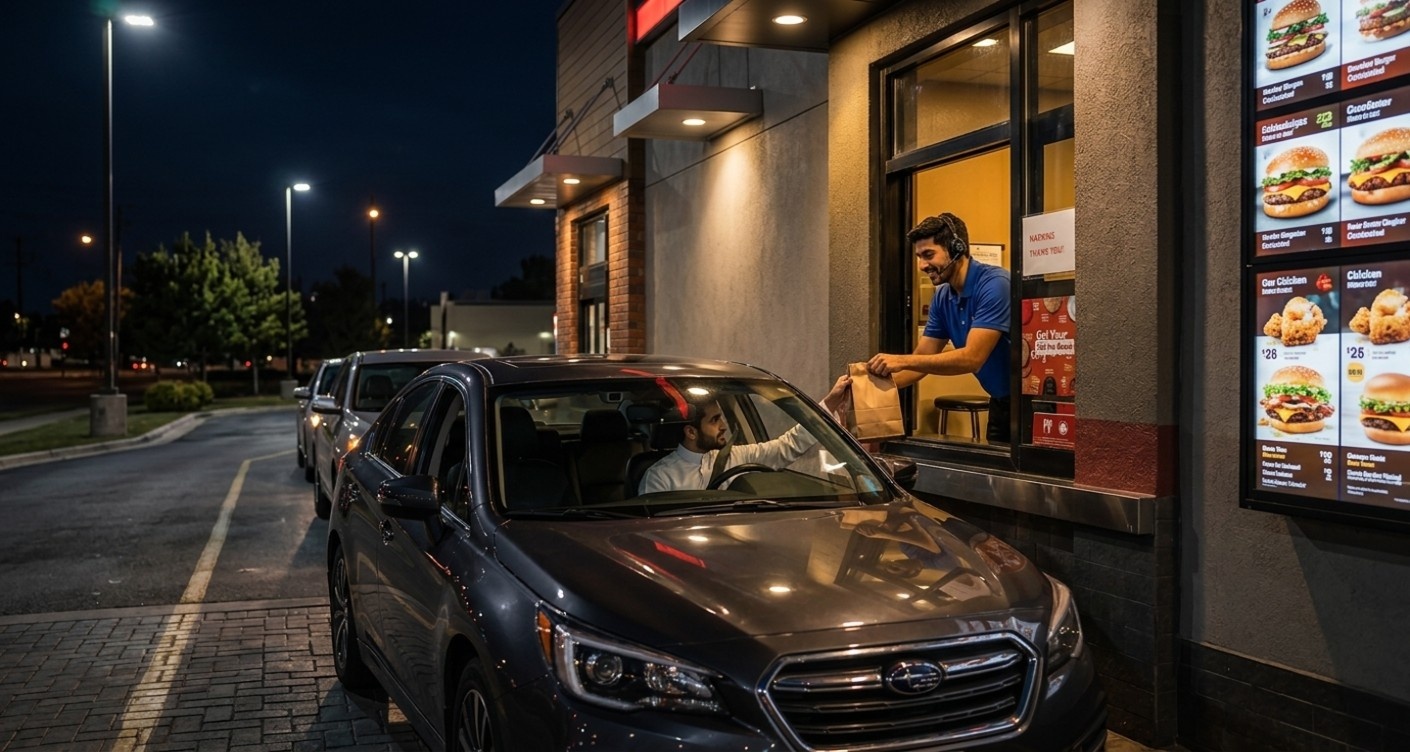
Drive-thru communication has evolved dramatically from basic intercom systems and static-filled conversations to sophisticated digital platforms designed to improve audio clarity, order accuracy, service speed, and restaurant operations.
For Quick Service Restaurants (QSRs), communication is no longer simply about helping employees hear customers.
Modern drive-thru communication systems are becoming part of a connected restaurant ecosystem that can combine headsets, timers, vehicle detection, digital menu boards, kitchen operations, and real-time analytics.
This transformation is particularly relevant in Saudi Arabia, where QSR brands across Riyadh, Jeddah, Dammam, Al-Khobar, and Makkah are investing in faster, more technology-driven customer experiences.
The future of drive-thru communication isn’t just clearer audio.
It is intelligent communication connected to real-time restaurant operations.
1. From Basic Intercoms to Digital Drive-Thru Communication
Early drive-thru systems had a relatively simple objective: allow employees to communicate with customers without physically standing at the ordering window.
However, traditional systems often struggled with:
- Background noise
- Poor audio quality
- Static
- Interference
- Limited communication range
- Difficult conversations during peak hours
For restaurant employees working around kitchen equipment, vehicles, ventilation systems, music, and other staff, hearing every customer clearly could be challenging.
When communication fails, the consequences can extend beyond frustration.
Misheard orders can lead to:
- Repeated conversations
- Incorrect modifications
- Longer order times
- Order corrections
- Customer dissatisfaction
- Slower drive-thru throughput
As QSR operations became busier, communication technology had to evolve.
2. The Rise of Wireless Drive-Thru Headsets
Wireless headsets represented a major shift in restaurant communication.
Instead of being tied to a fixed communication station, employees could move throughout the restaurant while staying connected to the drive-thru.
This created several operational advantages.
Employees could communicate while:
- Preparing orders
- Moving between kitchen stations
- Managing the pickup window
- Coordinating with other employees
- Supporting peak-hour operations
For busy QSR environments, wireless communication became an important part of coordinating the entire service process.
The headset was no longer simply an audio device.
It became a real-time communication tool for restaurant teams.
3. HD Audio Changed the Drive-Thru Conversation
As customer expectations increased, basic wireless communication was no longer enough.
Audio quality became a major priority.
Modern HD audio systems are designed to provide clearer voice communication while reducing the impact of environmental noise.
This is particularly important in locations where the drive-thru environment can include:
- Vehicle engines
- Air-conditioning systems
- Wind
- Traffic
- Kitchen equipment
- Multiple employees speaking
- Restaurant music
Better audio can reduce the number of times customers and employees need to repeat information.
For operators, that can translate into smoother ordering and potentially faster service.
4. The Shift From Headsets to Communication Platforms
The next major evolution was moving beyond the headset itself.
Modern drive-thru communication platforms can connect different areas of a restaurant rather than treating the drive-thru as an isolated communication channel.
Depending on the technology architecture, communication can extend across:
Drive-Thru → Kitchen → Pickup → Curbside → Restaurant Operations
This creates a more connected environment where restaurant employees can coordinate more effectively.
For multi-location QSR brands, this type of technology can also support more standardized operational processes.
5. AI Is Changing Drive-Thru Audio
One of the most important developments in drive-thru communication is the introduction of AI-powered audio processing.
Traditional noise reduction generally relies on predefined filters.
But drive-thru environments aren’t static.
Noise changes continuously.
A vehicle may arrive while a kitchen machine is operating. Another customer may be speaking nearby. Traffic conditions may change. Wind and weather can also affect audio quality.
AI-based audio processing can analyze the sound environment dynamically and distinguish speech from surrounding noise.
The objective is straightforward:
Make the customer’s voice easier for the employee to understand.
This can help reduce unnecessary repetition and improve communication during busy periods.
6. Why Clear Communication Matters for QSR Performance
Drive-thru communication has a direct relationship with operational efficiency. Consider a simple interaction. A customer places an order, but the employee cannot clearly hear a modification. The employee asks the customer to repeat it. The customer repeats it. The employee confirms it again. That interaction may only add a few seconds.
But multiply those seconds across hundreds of daily transactions and the operational impact becomes much larger.
Poor communication can contribute to:
- Longer order times
- Increased employee workload
- Customer frustration
- Order inaccuracies
- Reduced throughput
For high-volume QSR locations, small improvements can compound quickly.
7. Communication and Drive-Thru Timing Are Converging
Another major development is the integration between communication systems and drive-thru timing technology.
Historically, these systems operated independently.
A timer measured service performance.
A headset handled communication.
Managers reviewed performance separately.
Modern systems can bring these functions closer together.
For example, when a vehicle has been waiting longer than the restaurant’s target, an alert can be sent to the relevant team members through the restaurant’s communication system.
This changes how restaurants respond to operational problems.
Instead of discovering a performance issue later in a report, employees can receive information as the situation unfolds.
8. Camera-Based Timing Will Expand the Picture
Drive-thru timing itself is also evolving.
Traditional loop detectors measure vehicles at specific points in the lane.
However, camera-based systems can provide broader visibility across the customer journey.
They can potentially monitor areas such as:
- Pre-queue
- Ordering point
- Payment
- Pickup
- Pull-forward areas
- Mobile pickup
- Exit
This creates an opportunity to connect communication with a much broader understanding of restaurant performance.
Instead of simply knowing that a vehicle is delayed, operators can better understand where the delay is happening.
9. The Future: Intelligent Drive-Thru Ecosystems
The next generation of drive-thru technology will likely be increasingly interconnected.
Rather than having separate systems for communication, timing, menu boards, kitchen operations, and analytics, restaurants are moving toward integrated technology environments.
A future-ready drive-thru may combine:
AI-Powered Audio
Improves speech clarity and reduces environmental noise.
Smart Headsets
Allow employees to communicate throughout the restaurant.
Camera-Based Vehicle Detection
Provides broader visibility into vehicle movement and queue behavior.
Drive-Thru Timers
Track service performance and operational targets.
Digital Menu Boards
Deliver dynamic and visually engaging menu experiences.
Kitchen Display Systems
Help coordinate order preparation.
Real-Time Analytics
Give managers actionable performance information.
Centralized Management
Allows restaurant groups to monitor technology across multiple locations.
Together, these technologies create a connected operational ecosystem.
10. Why This Matters for Saudi Arabia
Saudi Arabia’s restaurant industry is undergoing significant digital transformation.
QSR brands are expanding their footprints while customers increasingly expect convenient, fast, and consistent service.
This makes technology particularly important for restaurants operating in:
- Riyadh
- Jeddah
- Dammam
- Al-Khobar
- Makkah
- Madinah
- Other growing Saudi markets
Peak periods such as Ramadan, Eid, weekends, and evening dining hours can create significant demand.
A reliable communication system can help restaurant teams coordinate effectively when pressure increases.
11. How FAMA Technologies Supports Modern QSR Technology
FAMA Technologies helps businesses explore connected technology solutions for modern restaurant environments in Saudi Arabia and the wider Middle East.
Its capabilities can include:
- Drive-Thru Solutions
- Drive-Thru Communication Systems
- Digital Menu Boards
- Digital Signage
- Kitchen Display Systems
- IT Infrastructure
- Network Solutions
- Restaurant Technology Integration
Rather than treating communication as an isolated component, FAMA Technologies can help organizations consider how different technologies work together across the restaurant.
For QSR groups managing multiple branches, this approach can help create more consistent technology environments while supporting future expansion.
12. What Should Restaurants Look for in a Modern Drive-Thru Communication System?
When evaluating a new system, restaurant operators should consider more than headset specifications.
Important factors include:
Audio Quality:
Can employees clearly hear customers during peak periods?
Noise Management
How effectively does the system handle changing environmental noise?
Wireless Reliability:
Can employees move freely without communication interruptions?
Scalability:
Can the system support additional lanes, stations, or locations?
Integration:
Can it work alongside timers, analytics, kitchen systems, and other restaurant technologies?
Ease of Management:
Can managers monitor and maintain the system efficiently?
Future Readiness:
Can the platform support new technologies and operational requirements?
These considerations are particularly important for restaurant groups planning long-term expansion.
13. Where Drive-Thru Communication Is Heading
The future of drive-thru communication is moving from voice transmission to intelligent operational communication.
- AI can help improve audio.
- Timers can provide performance information.
- Cameras can provide vehicle intelligence.
- Analytics can identify operational trends.
- Integrated platforms can deliver information to the people who need it at the right moment.
The result is a drive-thru environment where technology doesn’t simply record what happened.
It helps restaurant teams understand what is happening and what needs attention.
Conclusion:
Drive-thru communication technology has evolved from basic intercoms into sophisticated platforms that support communication, service speed, order accuracy, and restaurant operations.
The next stage is even more connected.
AI-powered audio, wireless communication, camera-based timing, digital menu boards, kitchen technology, and real-time analytics are gradually becoming part of a single technology ecosystem.
For Saudi QSR operators, this evolution presents an opportunity to build drive-thru environments that are clearer, faster, more connected, and easier to manage.
With the right technology strategy, communication doesn’t have to be simply about hearing the customer.
It can become part of a broader system designed to improve the entire customer journey.
Take the Next Step
Ready to modernize your restaurant’s drive-thru communication?
FAMA Technologies can help you explore drive-thru communication, digital menu boards, timing systems, kitchen technology, IT infrastructure, and integrated QSR solutions designed for the Saudi market.
Whether you’re upgrading a single restaurant or planning technology across multiple locations, choosing an integrated and scalable platform can help prepare your operation for the next generation of drive-thru technology.
Contact FAMA Technologies today to discuss your requirements and discover the right drive-thru communication solution for your restaurant.