Introduction
Modern meetings are no longer limited to people sitting around a table with a laptop and projector. With hybrid work, remote collaboration, video conferencing, and digital presentations becoming part of everyday business operations, companies need meeting rooms equipped with the right technology.
But what equipment does a modern meeting room actually need?
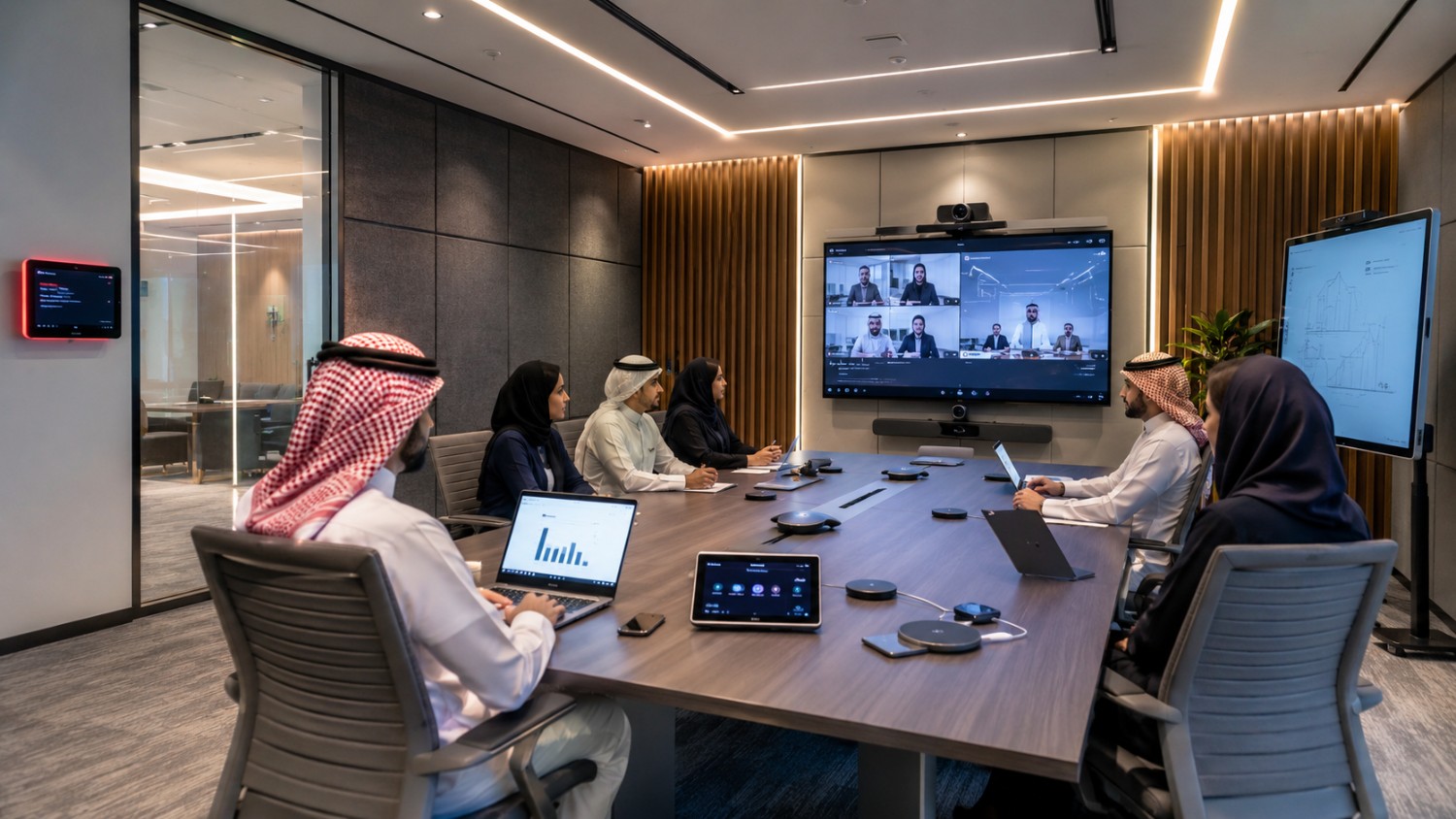
A professional meeting room should combine audio, video, presentation, collaboration, connectivity, and room management technologies to create a seamless experience for both in-room and remote participants.
For businesses in Saudi Arabia and the wider GCC, investing in the right meeting room equipment can improve communication, reduce technical issues, and create a more productive workplace.
1. What Is a Modern Meeting Room?
A modern meeting room is a technology-enabled workspace designed to support face-to-face, hybrid, and virtual meetings.
Unlike a traditional conference room that may only have a table, chairs, and a display screen, a modern meeting room integrates technologies such as:
- Video conferencing systems
- Professional displays
- Conference cameras
- Microphones and speakers
- Wireless presentation systems
- Room booking systems
- Digital room panels
- Collaboration software
- Smart control systems
The exact equipment required depends on the room size, number of users, meeting type, and business requirements.
Essential Equipment for a Modern Meeting Room
1. Professional Display or Large Screen
One of the most important pieces of meeting room equipment is a professional display.
A large commercial display allows participants to clearly view presentations, documents, dashboards, video calls, and shared content.
Depending on the room size, businesses may use:
- Commercial LED displays
- Large-format professional displays
- Interactive displays
- Multiple screens
- Video walls for larger conference spaces
The screen should be positioned so that everyone in the room can comfortably view the content.
For boardrooms and executive meeting rooms, high-resolution displays can also provide a more premium and professional meeting experience.
2. Video Conferencing Camera
A high-quality camera is essential for hybrid meetings.
A basic laptop webcam may work for one person, but it is usually not suitable for a professional conference room where several people need to participate.
Modern video conferencing cameras can include features such as:
- Wide-angle views
- Automatic framing
- Speaker tracking
- Pan, tilt, and zoom
- AI-powered participant detection
- High-definition or 4K video
The right camera ensures remote participants can clearly see the people speaking in the room.
3. Professional Microphones
Poor audio can quickly ruin an otherwise good meeting.
Professional meeting rooms therefore require dedicated microphones instead of relying only on a laptop microphone.
Depending on the room design, businesses can use:
- Table microphones
- Ceiling microphones
- Wireless microphones
- Boundary microphones
- Microphone arrays
Microphones should be positioned to capture voices clearly while minimizing background noise and echo.
For larger conference rooms, microphone arrays and advanced audio processing can provide better coverage.
4. Speakers and Audio System
Clear audio is equally important for remote participants.
A professional conference room audio system allows people inside the room to hear remote participants, presentations, videos, and other meeting content clearly.
A suitable system may include integrated conference speakers, ceiling speakers, soundbars, or dedicated room audio systems.
Good meeting room audio equipment should provide clear voice reproduction while reducing echo and unwanted background noise.
5. Video Conferencing System
The camera, microphone, speakers, display, and conferencing platform should work together as one system.
A dedicated video conferencing system can make it easier to start and manage virtual meetings without complicated setups.
Depending on business requirements, meeting rooms may be designed to support platforms such as Microsoft Teams, Zoom, Google Meet, or other collaboration platforms.
The goal is simple: users should be able to walk into the room and start a meeting with minimal technical assistance.
6. Wireless Presentation System
Connecting a laptop using multiple cables every time someone wants to present can waste valuable meeting time.
A wireless presentation system allows users to share content from laptops or mobile devices with minimal setup.
This can be particularly useful when multiple people need to present during the same meeting.
Wireless presentation technology can help improve:
For modern offices, wireless content sharing is becoming an important part of meeting room technology.
7. Room Booking System
A meeting room can have excellent technology but still create problems if employees cannot easily find or reserve available rooms.
A meeting room booking system allows employees to check room availability and reserve spaces based on their requirements.
Digital room panels placed outside meeting rooms can show information such as:
- Room name
- Current availability
- Upcoming meetings
- Meeting duration
- Booking status
Some systems can also integrate with corporate calendars, helping employees manage meeting spaces more efficiently.
8. Interactive Display or Collaboration Board
For brainstorming, workshops, training sessions, and strategy meetings, an interactive display can provide additional flexibility.
Users can write, draw, annotate documents, brainstorm ideas, and collaborate on digital content directly on the screen.
Interactive displays are especially useful for:
- Training rooms
- Design teams
- Project planning
- Workshops
- Creative collaboration
- Executive strategy meetings
This transforms the meeting room from a presentation space into an interactive workspace.
9. Room Control System
Modern meeting rooms may contain multiple technologies, and controlling each device separately can become complicated.
A centralized meeting room control system can allow users to control devices such as displays, cameras, lighting, audio, and other room technologies from a single interface.
For example, a user could start a meeting and automatically activate the required display, camera, and audio system.
This reduces the number of steps required to prepare a room for a meeting.
10. Reliable Network Connectivity
Even the best meeting room equipment cannot perform properly without a reliable network.
Video conferencing, cloud applications, wireless presentation, room booking systems, and collaboration platforms all depend on stable connectivity.
A modern meeting room should therefore have:
- Reliable Wi-Fi
- High-speed wired connectivity where required
- Proper network coverage
- Adequate bandwidth
- Secure network access
Businesses should also consider network capacity when deploying multiple video-enabled meeting rooms across an office.
11. Cables, Connectivity and Power
Although wireless technology is becoming increasingly common, cables are still an important part of meeting room infrastructure.
Meeting rooms may require HDMI, USB, USB-C, Ethernet, power connections, and other connectivity options.
Cable management should be planned carefully to prevent clutter and make connections easy for users.
Power outlets should also be conveniently positioned so participants can charge laptops and mobile devices during long meetings.
12. Lighting and Acoustic Treatment
Meeting room technology is not limited to screens and cameras.
Lighting can significantly affect camera quality. A room with poor lighting may create dark faces, shadows, reflections, or inconsistent video quality.
Similarly, acoustic treatment can help reduce echo and improve speech clarity.
A professional meeting room should therefore consider:
- Appropriate lighting
- Controlled reflections
- Acoustic panels
- Noise reduction
- Proper speaker placement
- Suitable room layout
These elements work together with the technology to create a better meeting environment.
How to Choose the Right Meeting Room Equipment
There is no single equipment setup that works for every meeting room.
Before purchasing technology, businesses should evaluate:
Room Size: A small huddle room will require different equipment from a large boardroom.
Meeting Type: Consider whether the room is primarily used for video conferencing, presentations, training, brainstorming, or executive meetings.
Number of Participants: Larger groups require better microphone and camera coverage.
Hybrid Meeting Requirements: If remote participation is frequent, prioritize professional video and audio systems.
Ease of Use: Technology should be simple enough for employees to operate without technical assistance.
Integration: Equipment should work together rather than creating multiple disconnected systems.
Scalability: Businesses planning multiple meeting rooms should consider standardized solutions that can be deployed across locations.
Meeting Room Solutions for Modern Businesses
Implementing a professional meeting room requires more than purchasing individual devices. The camera, display, microphones, speakers, presentation system, room booking technology, network, and control system need to work together.
This is where a professional meeting room solution provider can add value.
FAMA Technologies provides meeting room solutions designed to help businesses create connected and technology-enabled collaboration spaces. FAMA Technologies can help businesses plan meeting room technology based on room size, usage requirements, collaboration needs, and existing IT infrastructure.
Instead of selecting equipment individually, businesses can take a solution-based approach where the different components are designed to work together.
Conclusion
So, what equipment does a modern meeting room need?
At a minimum, businesses should consider a professional display, video conferencing camera, microphones, speakers, presentation system, room booking technology, reliable connectivity, and appropriate room control.
For more advanced environments, interactive displays, centralized controls, smart room management, acoustic treatment, and integrated collaboration technologies can further improve the meeting experience.
The most important consideration is not simply buying the latest technology. It is creating a meeting environment where employees can start meetings quickly, communicate clearly, share content easily, and collaborate effectively with both in-room and remote participants.
For organizations planning a new meeting room or upgrading existing conference rooms, FAMA Technologies can help design a complete meeting room solution based on specific business and workplace requirements.