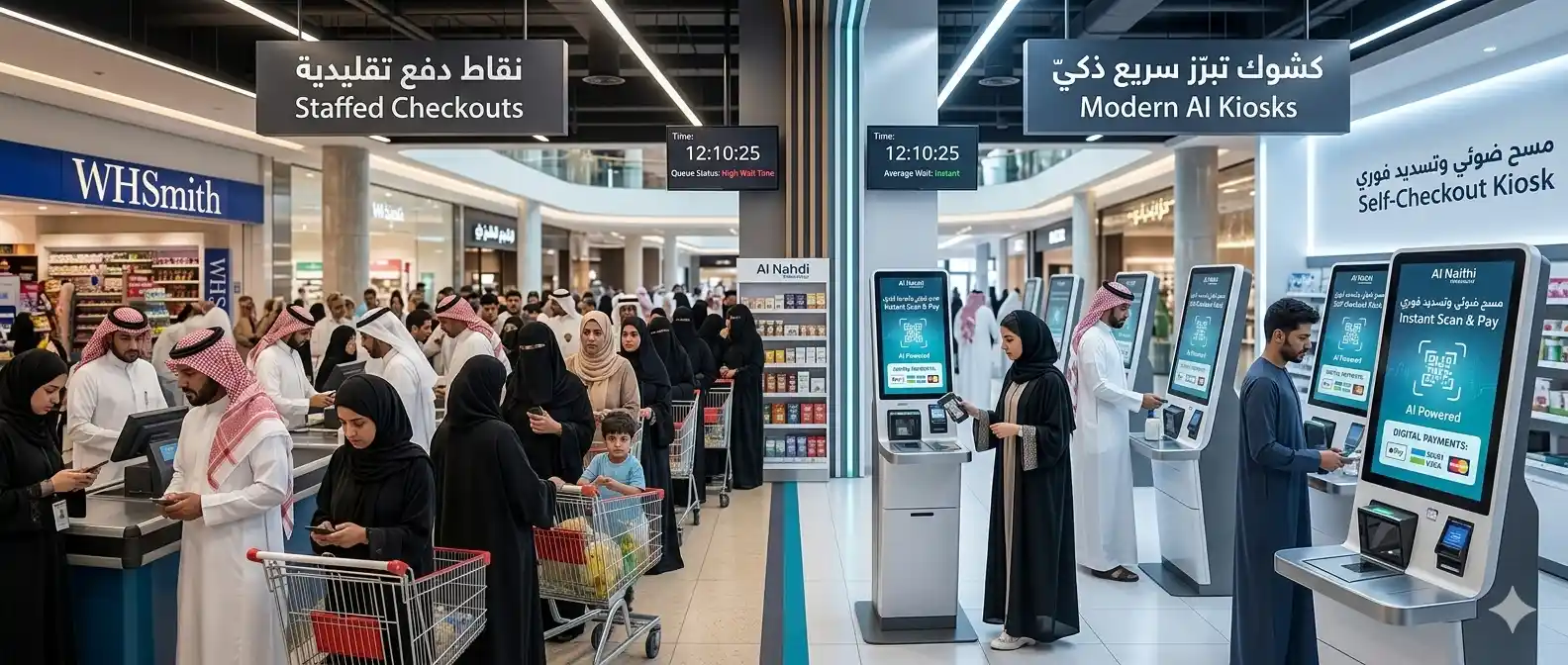
Introduction: A Growing Problem in Saudi Retail
Saudi Arabia’s retail sector is expanding rapidly, contributing significantly to the economy and experiencing strong year-on-year growth driven by Vision 2030 initiatives.
However, with this growth comes a critical challenge that many retailers are still struggling with — slow billing processes.
In today’s fast-paced, digitally driven environment, customers expect quick, seamless, and frictionless shopping experiences. Unfortunately, long queues and slow checkout systems are still common in many stores across KSA, directly impacting customer satisfaction and business performance.
1. The Modern Saudi Customer: Speed is Everything
Today’s consumers in Saudi Arabia are highly digital and convenience-driven. With over 95% smartphone penetration and increasing adoption of mobile payments, customers expect instant service and minimal waiting time.
They are used to:
- One-click online purchases
- Fast delivery options
- Seamless digital payments
When they visit physical stores and face long billing queues, the experience feels outdated and frustrating.
How Slow Billing Impacts Customer Experience
1. Long Waiting Times Lead to Frustration
One of the most immediate effects of slow billing is increased waiting time. Customers standing in queues:
- Lose patience
- Feel stressed
- May abandon their purchase
In a competitive retail environment, even a few minutes of delay can result in lost sales.
2. Negative Brand Perception
Customer experience directly affects how a brand is perceived. Slow checkout processes create an impression of:
- Poor management
- Outdated systems
- Lack of innovation
This can damage brand reputation and reduce customer loyalty.
3. Reduced Repeat Customers
Modern consumers prioritize convenience. If a store consistently provides a slow checkout experience:
- Customers are less likely to return
- They may switch to competitors
- Online shopping becomes a preferred alternative
4. Increased Cart Abandonment in Physical Stores
Just like e-commerce cart abandonment, physical stores also face similar issues. Long queues often result in:
- Customers leaving products behind
- Reduced overall sales
Current Market Challenges Making Things Worse
1. Supply Chain Disruptions & Global Uncertainty
Recent global challenges, including geopolitical tensions and trade disruptions, have impacted supply chains across the GCC region. Retailers in Saudi Arabia heavily depend on imports, making them vulnerable to delays and stock issues.
This creates:
- Inventory mismatches
- Billing delays due to system inefficiencies
- Increased operational pressure
2. Rapid Retail Growth Without Matching Technology
Saudi Arabia’s retail sector is growing fast, but not all businesses are upgrading their technology at the same pace.
Many stores still rely on:
- Traditional POS systems
- Manual billing processes
- Limited automation
This creates bottlenecks during peak hours.
3. Rising Customer Expectations
With the rise of AI, automation, and omnichannel retail, customers now expect:
- Fast checkout
- Self-service options
- Digital payment flexibility
Retailers who fail to meet these expectations risk falling behind.
4. Why Traditional Billing Systems Are Failing
Traditional billing systems are no longer sufficient because they:
- Depend heavily on human intervention
- Are prone to errors
- Cannot handle peak traffic efficiently
In a high-demand environment like Saudi malls and supermarkets, these systems slow down operations instead of supporting them.
The Solution: Smart Retail Systems by FAMA Technologies
To overcome these challenges, retailers need to adopt modern, automated solutions — and this is where FAMA Technologies plays a crucial role.
Self-Checkout Systems
Customers can scan and pay for products themselves, reducing dependency on staff and minimizing queues.
AI-Powered Retail Solutions
Automation speeds up billing and reduces errors, ensuring a smoother checkout experience.
Queue Management Systems
Real-time monitoring helps manage customer flow efficiently and prevent bottlenecks.
Digital Payment Integration
Supports fast, contactless, and mobile payments aligned with KSA’s cashless economy vision.
How FAMA Technologies is Helping KSA Retailers
FAMA Technologies is actively supporting retailers in Saudi Arabia by:
- Implementing smart checkout systems
- Reducing billing time significantly
- Enhancing customer experience
- Providing scalable and future-ready solutions
By integrating advanced technologies, FAMA enables businesses to stay competitive in a rapidly evolving retail landscape.
Business Benefits of Faster Billing
Retailers adopting smart solutions can achieve:
- Reduced waiting time
- Increased customer satisfaction
- Higher sales conversion rates
- Improved operational efficiency
- Better staff productivity
Future of Retail in Saudi Arabia
The future of retail in KSA is clearly moving toward:
- Automation
- AI-driven systems
- Self-service experiences
- Cashless transactions
Retailers who invest in these technologies today will lead the market tomorrow.
Conclusion: Speed is the New Standard
Slow billing is no longer just an operational issue — it is a customer experience problem that directly impacts revenue and brand perception.
In a country like Saudi Arabia, where digital transformation is accelerating under Vision 2030, businesses must adapt to changing expectations.
With solutions from FAMA Technologies, retailers can eliminate bottlenecks, enhance efficiency, and deliver the fast, seamless experiences that modern customers demand.
Take the Next Step
Ready to eliminate long queues and improve your store’s performance?
Partner with FAMA Technologies today to implement smart self-checkout and retail automation solutions tailored for your business.
Contact us now and transform your retail experience.